
Purple mountain saxifrage
Saxifraga oppositifolia
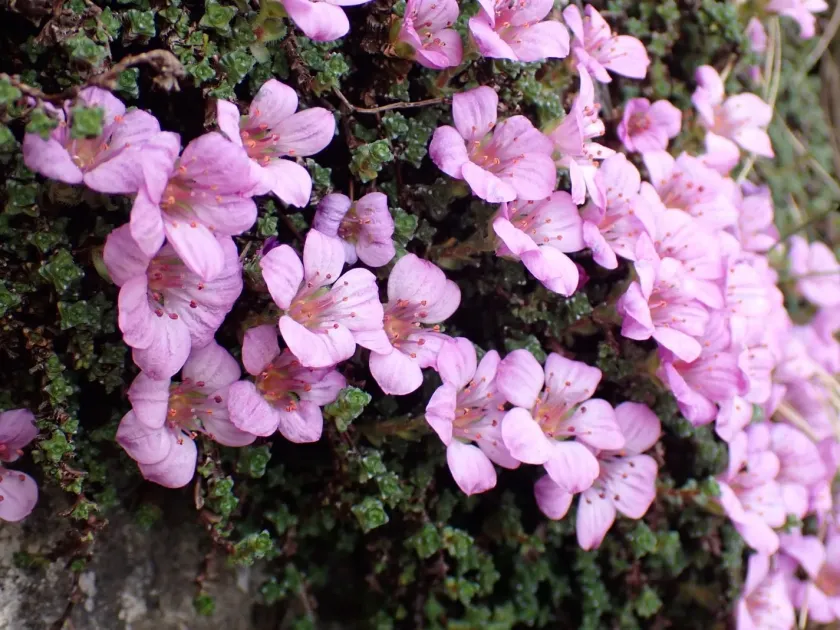
Description
Sowing dates
Seeds of the purple mountain saxifrage require a cold stratification period to break dormancy and ensure uniform germination in a controlled environment.
The seeds are extremely small and should be sown on the surface of a grit-based potting mix, ensuring they remain in contact with moisture but not buried deep.
Propagation is most successful when seeds are sown in autumn, allowing the natural freeze-thaw cycles to facilitate the biological readiness for spring sprouting.
For greenhouse cultivation, temperatures must be kept cool, preferably between 5 and 10 degrees Celsius, as high heat inhibits the development of the seedlings.
Once established, the seedlings should be kept in well-drained conditions, gradually increasing their exposure to natural light as the root system matures.
Growing requirements
Saxifraga oppositifolia is a member of the Saxifragaceae family, naturally adapted to harsh arctic and alpine climates with high wind and low soil nutrients.
Successful cultivation requires a gritty, rocky substrate with excellent drainage, as the species cannot tolerate prolonged saturation of its roots.
The plant thrives in full sun but requires protection from excessive heat in lower latitudes; it is best planted in north or east-facing rock gardens.
Mineral-rich soils with a slightly alkaline pH are preferred, reflecting the limestone and calcareous rock environments found in its native tundra habitat.
Maintenance involves minimal irrigation, focusing on providing moisture during peak growth while ensuring the root crown remains dry to prevent fungal issues.
Main diseases and pests
The primary threat to the species is moisture-induced crown rot, which occurs when air circulation is poor or the soil remains stagnant for too long.
Gastropods such as slugs and snails are notorious for feeding on the tight mats of foliage, often causing significant aesthetic damage during wet seasons.
In humid environments, botrytis or grey mold can spread rapidly through the foliage, necessitating the removal of affected sections to save the plant.
Root aphids can occasionally infest the root system, causing yellowing and stunted growth that is often mistaken for drought-related stress by gardeners.
Prevention is centered on site selection, ensuring the planting site is elevated and well-drained to avoid the accumulation of standing water around the crown.