
Michaux's saxifrage
Saxifraga michauxii
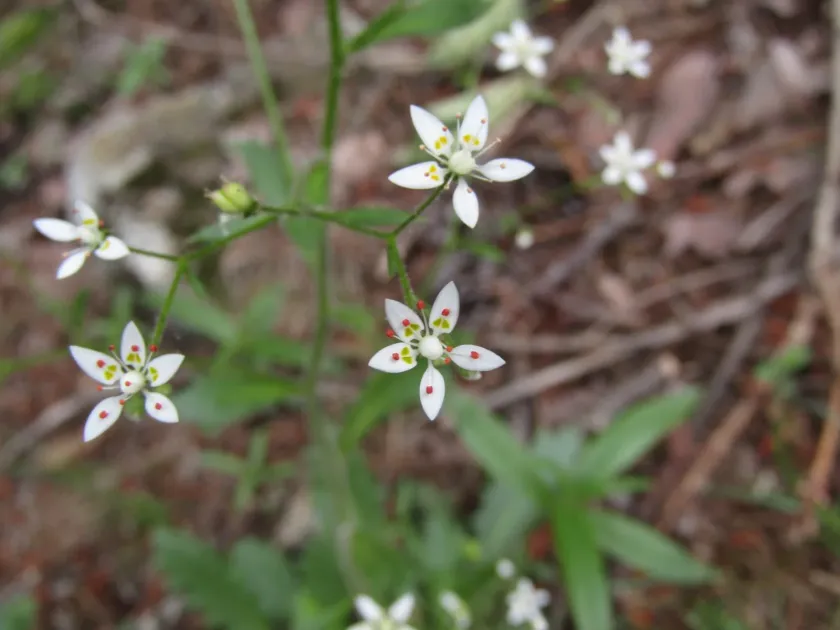
Description
Sowing dates
Sowing Michaux's saxifrage is best performed in late winter or early spring to allow for natural stratification, which is essential for breaking seed dormancy. Seeds should be surface-sown on a well-draining, sterile potting mix, as they require light to germinate and should not be covered with soil.
Maintain consistent humidity by covering the containers with plastic film or glass, placing them in a cool, bright location. Germination can be slow and irregular, sometimes taking several weeks to complete; therefore, patience and a stable environment are key during this stage.
Once seedlings develop their first set of true leaves, they should be carefully pricked out and transplanted into individual pots. Using a sandy substrate helps to ensure proper root development and prevents the young plants from suffering in overly heavy or dense soil conditions.
Vegetative propagation via division of established clumps is highly effective and can be done after the flowering season. This method produces robust, genetically identical plants that are often more resilient and quicker to establish in the rock garden than those grown from seed.
Transplanting seedlings to the final outdoor location should only occur once the danger of late frost has passed. Ensure each plant has enough space—at least 15 to 20 centimeters apart—to allow for adequate airflow around the rosette, which is vital for long-term health.
Growing requirements
Belonging to the Saxifragaceae family, Michaux's saxifrage thrives in conditions mimicking its native North American rocky outcrops. The most critical requirement for cultivation is excellent drainage; standing water is fatal to this species and will quickly lead to root decay.
The ideal planting site provides dappled sunlight or partial shade. While these plants enjoy bright conditions, they are sensitive to intense midday sun, which can scorch the foliage and dry out the sensitive roots trapped within the rocky crevices of an alpine garden.
Soil composition should be lean, gritty, and mineral-based. Incorporating crushed gravel or horticultural sand into the planting hole enhances aeration and mimics the natural environment of the plant, preventing the accumulation of excessive moisture in the root zone.
Watering must be done with precision, aiming directly at the base of the plant to avoid wetting the foliage. Wet rosettes in cool, stagnant air are prone to fungal issues, so it is safer to water deeply but infrequently, allowing the top layer of soil to dry out between applications.
Fertilization should be kept to an absolute minimum. Michaux's saxifrage is adapted to nutrient-poor soils, and excessive nitrogen will cause the plant to grow leggy and lose its characteristic compact, attractive form. A light application of a balanced, low-dose fertilizer in early spring is usually sufficient.
Main diseases and pests
Fungal pathogens are the primary threat to Michaux's saxifrage, particularly in areas with poor ventilation or high humidity. Symptoms often include the yellowing of leaves or base rot, which require immediate removal of the affected parts and the application of a suitable fungicide.
Common pests such as spider mites and aphids may infest the dense rosettes, especially during dry spells. Routine inspection of the plants is essential; if pests are detected, a targeted application of an insecticidal soap or neem oil is usually effective in controlling the population.
Slugs and snails can cause significant damage to the soft leaves of the saxifrage. Creating a barrier of sharp grit around the base of the plant acts as a deterrent, keeping these mollusks away from the succulent foliage without the need for toxic chemicals.
The health of the plant is directly tied to its environment; therefore, preventing waterlogging is the best defense against disease. If a plant shows signs of distress, checking the drainage beneath the roots is the first step toward correcting the issue and saving the specimen.
Regular sanitation, such as removing decaying plant debris from around the rosettes, is a vital maintenance task. By keeping the base of the plant clean and dry, the gardener significantly reduces the risk of disease and ensures the plant remains vigorous and aesthetically pleasing.