
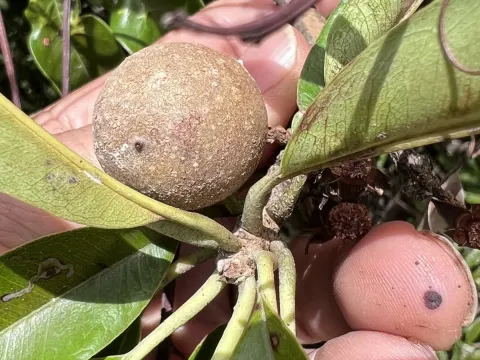
Manilkara chicle
Manilkara chicle
Manilkara chicle is a prominent evergreen tropical tree belonging to the Sapotaceae family. Known primarily for its historical importance in the chewing gum industry, this species can reach heights of up to 30 meters in the dense tropical forests of Central America. Its bark is dark and deeply fissured, serving as the main reservoir for its valuable latex.
What the section contains
Manilkara chicle
The native range of the species encompasses the tropical regions of Mexico, Belize, and Guatemala. It thrives in humid tropical climates characterized by high annual rainfall and constant warm temperatures. It prefers deep, well-drained soils rich in forest litter, which provides the necessary nutrients for its slow but steady development over decades.
Botanically, the tree is characterized by simple, alternate leaves and small, fragrant flowers that develop into edible, fleshy berries. The most significant physiological feature is the latex sap, which is harvested from the trunk. The tree is shade-tolerant in its early stages of life, gradually emerging into the canopy as it matures under the forest cover.
Cultivation practices involve selecting suitable sites with consistent moisture levels and protecting young stands from invasive vegetation. Proper management of the forest ecosystem is crucial, as the tree relies on the presence of diverse microbial life in the soil for nutrient uptake. It is not adapted to regions with cold spells, which can permanently damage the sensitive xylem tissues.
The primary economic use of Manilkara chicle is the production of chicle, a natural gum base traditionally used to manufacture chewing gum. Beyond the sap, the wood of this species is renowned for its extreme density and resistance to rot, making it a valuable material for high-durability construction, fine furniture, and tool handles that must withstand humid conditions.
The tree is susceptible to various fungal pathogens that can affect the bark if harvesting techniques are overly aggressive or poorly timed. Pests such as wood-boring beetles can also target weakened individuals, potentially reducing the tree's health and productivity. Maintaining forest health through biodiversity is the most effective way to manage these natural threats.
Harvesting involves cutting a V-shaped or zigzag pattern into the bark, allowing the latex to flow slowly into collection bags. This process is carried out during the wet season when the tree's sap flow is at its peak. Skilled harvesters ensure that cuts are shallow enough to avoid long-term damage, allowing for periodic harvests every few years per individual tree.