
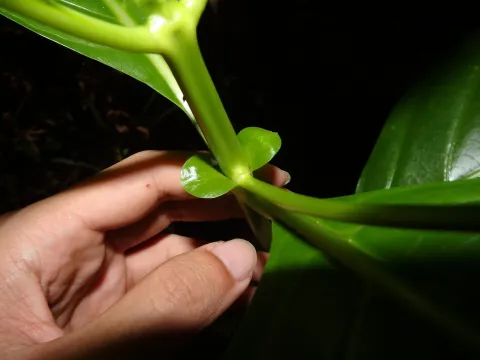
Mussaendopsis
Mussaendopsis
Mussaendopsis is a genus of evergreen trees belonging to the Rubiaceae family. These trees are essential components of tropical rainforest ecosystems in Southeast Asia, known for their specific growth habits and ecological adaptation to high-humidity environments.
What the section contains


Mussaendopsis
The native distribution of Mussaendopsis encompasses the tropical regions of Malaysia, Indonesia, and the Philippines. The tree thrives in lowland and montane tropical forests where heavy, consistent rainfall occurs throughout the year, supporting its vigorous vegetative development.
Cultivation requirements for Mussaendopsis center on deep, well-drained, and nutrient-rich soils. The species is highly intolerant to waterlogging, necessitating excellent soil structure to prevent root suffocation, especially in juvenile stages of development.
Regarding climate needs, Mussaendopsis requires consistent temperatures typically ranging between 24 and 30 degrees Celsius. High atmospheric humidity is non-negotiable for its survival, making it a challenging species to propagate outside of its natural tropical belt.
In terms of economic utility, Mussaendopsis is valued for the quality of its wood, which is utilized for construction and artisanal tools. Sustainable harvesting methods are currently being explored to balance industrial needs with the conservation of this valuable forest resource.
The primary threats to Mussaendopsis include various fungal pathogens that flourish in humid climates. Root rot and damping-off disease are significant issues that can devastate seedlings if proper nursery management practices are not strictly observed.
Pests, particularly termites and wood-boring insects, represent a major threat to mature Mussaendopsis trees. These organisms compromise the tree's structural integrity, leading to increased susceptibility to secondary infections and mechanical damage.
Habitat loss and deforestation are the most critical factors threatening the long-term survival of the species. As tropical forests are cleared for agricultural expansion, the remaining Mussaendopsis populations become increasingly fragmented and vulnerable.
Nursery health management relies on rigorous phytosanitary protocols to prevent the spread of soil-borne pathogens. Adequate spacing and ventilation within tree nurseries are essential to maintain dry foliage and reduce the occurrence of leaf blight.
Conservation efforts for Mussaendopsis emphasize the protection of native forest corridors. Maintaining a balanced ecosystem with diverse species helps to naturally regulate pest populations and reduce the overall incidence of disease in the wild.