
Myrmecodia beccarii
Myrmecodia beccarii
Description
Growing requirements
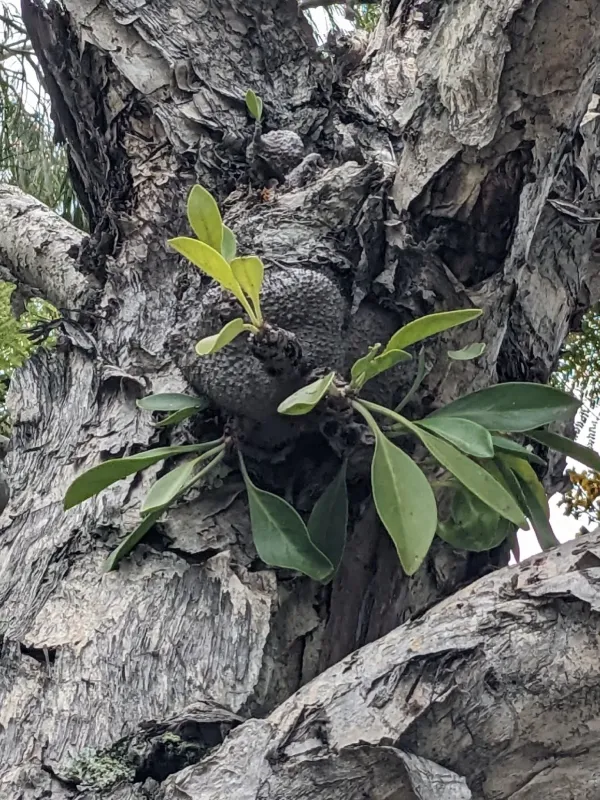
Myrmecodia beccarii is an intriguing epiphytic species within the Rubiaceae family, widely known as an ant plant due to its unique symbiotic relationship with ants in its native Australian rainforest habitats. It features a swollen, tuberous stem known as a caudex, which houses chambers for its insect symbionts.
The cultivation of this plant requires a controlled tropical environment with consistent temperatures between 22 and 28 degrees Celsius. Any significant drop in temperature or exposure to cold drafts can result in physiological stress or the total collapse of the plant.
Light requirements are stringent; the plant thrives in bright, filtered light. Exposure to direct midday sun will almost certainly lead to scorching of the foliage and the delicate skin of the caudex, which can cause irreparable damage to its photosynthetic capacity.
The growing medium must be highly porous and inorganic-heavy to mimic tree bark fissures. A mixture consisting of orchid bark, pumice, perlite, and a small amount of long-fiber sphagnum moss is recommended to ensure rapid drainage and air circulation around the roots.
Watering should be approached with extreme caution, ensuring the substrate dries significantly between cycles. Overwatering is the most common cause of crop failure, as trapped moisture inside the hollow caudex leads to rapid decay and secondary fungal infections.
Main diseases and pests
The primary threats to Myrmecodia beccarii are root and caudex rots caused by pathogenic fungi such as Phytophthora or Pythium. These occur when humidity is too high without adequate ventilation, preventing the evaporation of moisture from the plant's surface.
Pests like mealybugs represent a significant challenge, as they frequently shelter within the plant's natural chambers and axils. Their sap-sucking activity weakens the plant, often leading to stunted growth and yellowing of the foliage.
Scale insects are another common threat, often appearing as small, brown bumps on the undersides of leaves or along the stem. These are best managed through systematic applications of horticultural oil or specific systemic insecticides.
Spider mites can also proliferate if the environment becomes too dry or stagnant. Maintaining proper airflow using small fans and keeping relative humidity consistent is the best defense against these microscopic pests.
Effective management requires a combination of strict cultural practices and chemical control if an infestation is detected. Always ensure that any treatment used is labeled as safe for sensitive tropical epiphytes to avoid phytotoxicity.