
Myrmecodia tuberosa
Myrmecodia tuberosa
Description
Growing requirements
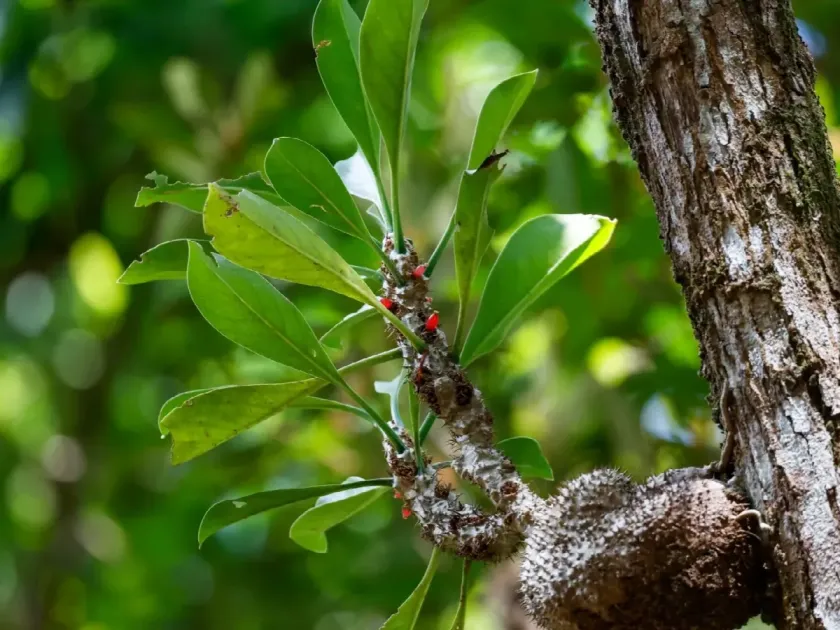
Myrmecodia tuberosa, commonly known as the ant-plant, belongs to the Rubiaceae family. This fascinating species is an epiphytic succulent that has evolved a specialized, swollen stem called a caudex, which provides shelter for ants in its native tropical environment.
The natural habitat of this species spans across the tropical forests of Southeast Asia, ranging from Indonesia to Northern Australia. To thrive in cultivation, the plant requires a climate that mimics these tropical conditions, featuring consistent warmth and high humidity levels.
Successful cultivation relies on an extremely well-draining potting medium. A mixture of orchid bark, perlite, charcoal, and a small amount of sphagnum moss is recommended to provide sufficient aeration for the roots while maintaining necessary moisture retention.
Myrmecodia tuberosa demands bright, filtered light. Exposure to direct, harsh sunlight can cause severe scorching of the caudex tissues, while insufficient light leads to spindly, weak growth and increased susceptibility to fungal diseases.
Watering management is crucial; the plant should be watered thoroughly but allowed to dry out slightly between sessions. Stagnant water around the base or within the caudex cavities will inevitably lead to rot, making proper drainage the most important factor in care.
Main diseases and pests
Fungal rots are the most common cause of mortality for Myrmecodia tuberosa in home collections. These infections are often triggered by improper watering schedules, poor air circulation, or temperatures that are too low for the plant's metabolic needs.
Pests such as mealybugs and spider mites are frequent invaders. Because of the complex, labyrinthine structure of the caudex, these pests are often difficult to eradicate completely once an infestation has established itself within the plant's natural cavities.
When treating for pests, it is essential to use systemic insecticides or mild horticultural soaps, as the delicate tissues of the caudex can be sensitive to harsh chemical treatments or oil-based substances that might block respiration.
Prevention involves maintaining high hygiene standards, such as using sterilized potting equipment and ensuring that all newly acquired specimens are kept in quarantine to avoid introducing pests or pathogens to the rest of the collection.
Monitoring for any discoloration or softness on the caudex surface is vital for early intervention. If rot is detected early, the affected area can sometimes be excised, followed by a period of strict dryness to promote callus formation and recovery.