
Mussaenda sanderiana
Mussaenda sanderiana
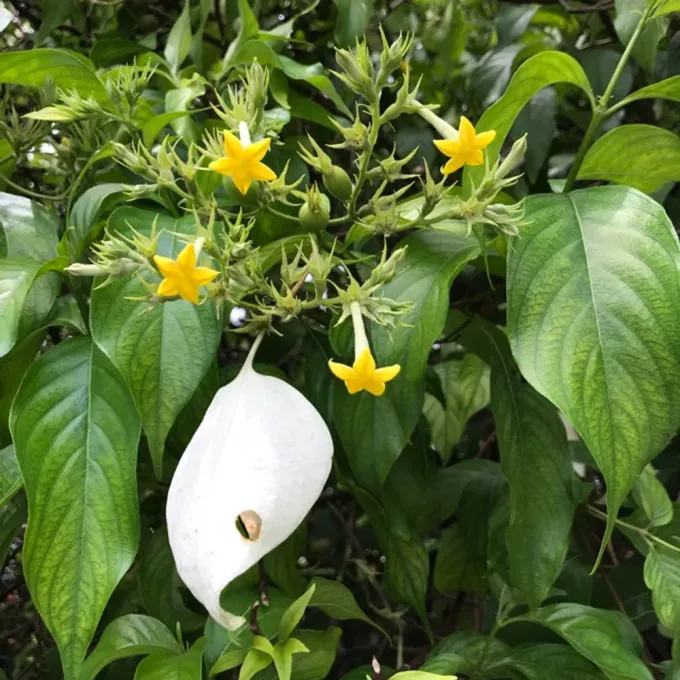
Description
Growing requirements
Mussaenda sanderiana is a highly decorative evergreen shrub belonging to the Rubiaceae family. Originally from tropical Asia, it is highly valued for its striking calyx lobes, which are often mistaken for flower petals.
The plant requires a warm, tropical climate for healthy growth, thriving at temperatures between 20°C and 30°C. Exposure to cold drafts or temperatures below 15°C can cause significant stress, leading to leaf drop and stunted development.
Ideal soil conditions involve a nutrient-rich, well-draining substrate with a slightly acidic pH level (typically 5.5 to 6.5). Because the plant is susceptible to root rot, the soil must be porous enough to allow for proper air exchange and water movement.
This species is highly dependent on light intensity; it thrives in bright, indirect sunlight. If kept indoors or in a greenhouse, it is essential to ensure that the light is filtered during peak solar hours to prevent leaf scorching.
Maintenance practices focus on maintaining humidity levels above 60% and providing consistent watering. During the active growing season, applying balanced, water-soluble fertilizers helps support the development of its ornamental bracts and foliage.
Main diseases and pests
Common pests include the spider mite and mealybug, which are known to infest the foliage, especially in environments with poor air circulation. Regular inspection of the undersides of the leaves is critical for early detection.
Fungal diseases like root rot and leaf spot are typically associated with poor drainage or overwatering. Using sterile soil mixes and avoiding standing water in saucers are the most effective preventive measures against these pathogens.