
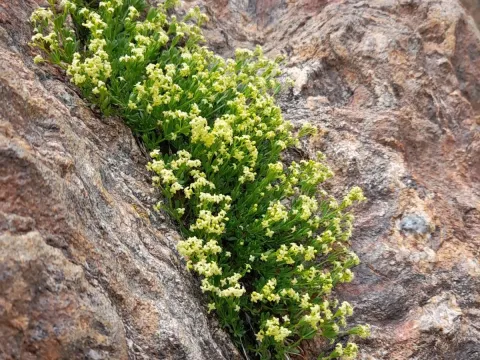
Galium tendae
Galium tendae
Galium tendae is a perennial herbaceous plant belonging to the Rubiaceae family. It is a rare species native to the alpine regions, known for its specific ecological niche and unique adaptation to high-altitude environments.
What the section contains
Galium tendae
The plant originates from the mountainous areas of the Western Alps. Its natural habitat is defined by rocky slopes and calcium-rich substrates, where it occupies crevices and sparse soil patches characteristic of high-altitude ecosystems.
The cultivation of Galium tendae requires well-drained, porous soil. High moisture content is detrimental to its development, so the soil structure must ensure rapid water drainage to prevent any accumulation at the roots.
Light requirements for this species are high. It thrives in full sunlight, as it is adapted to the intense radiation levels of alpine zones. Shaded conditions lead to weak stems and a significant decline in overall vitality.
Management practices emphasize minimal soil disturbance. Due to its slow growth habit, regular removal of encroaching weeds is essential. This plant requires a stable, undisturbed environment that mimics its natural high-altitude rocky habitat.
Fungal diseases related to root rot are the most significant threat to Galium tendae. Excessive humidity, combined with poor air circulation, creates an environment where pathogens can thrive and destroy the root system.
Insect pests such as aphids and specialized leaf miners can cause significant damage to the foliage. These pests weaken the plant, making it more susceptible to environmental stress and secondary bacterial infections.
Climatic instability poses a constant threat. Inconsistent snow cover during winter months can expose the crown to freezing temperatures, causing physical damage that hinders the plant's growth in the spring.
Invasive competition from other plant species is a primary threat in cultivation. Because Galium tendae is a slow-growing species, it is easily suppressed by faster-growing vegetation if the site is not properly managed.
Soil erosion and habitat destruction remain the most critical threats to wild populations. In agricultural or ornamental settings, these issues are mitigated by proper site stabilization and consistent monitoring of plant health.