
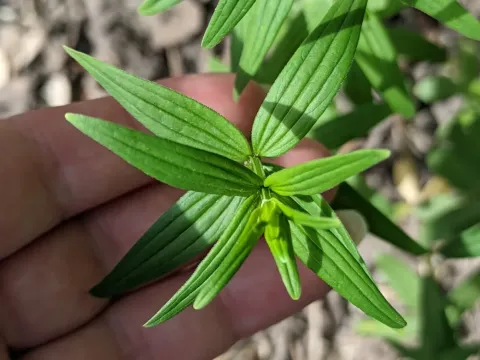
Galium rubioides
Galium rubioides
Galium rubioides, commonly known as madder-leaved bedstraw, is a perennial herbaceous plant belonging to the Rubiaceae family. It is native to temperate regions across Eurasia, where it typically thrives in grasslands, forest margins, and meadow habitats that provide moderate environmental conditions.
What the section contains
Galium rubioides
The plant features distinct leaves arranged in whorls along a sturdy stem and displays delicate, small white flowers organized into terminal panicles. Its strong, creeping rhizomatous root system allows the plant to form dense colonies, making it a robust species capable of persistent growth in its preferred habitats.
Cultivation requires well-drained, fertile soil with a neutral pH, ensuring the plant receives adequate moisture without waterlogging. It performs optimally in sites that provide partial shade, which mimics its natural forest-edge environment and prevents excessive wilting during the peak of the summer season.
In terms of agricultural management, maintenance involves minimal input beyond initial soil preparation and weed control during the establishment phase. Since the plant is highly adaptable to various temperature fluctuations, it does not require specialized protection against cold, making it a low-maintenance botanical asset.
The economic importance of this crop lies primarily in its potential for pharmaceutical applications, as parts of the plant are recognized for specific phytochemical properties. Additionally, it serves as a valuable resource for botanical research and as a sustainable choice for ground cover in naturalistic landscaping projects.
The primary health risks for this crop include fungal infections such as powdery mildew, which can thrive in stagnant air conditions or dense plant populations. Pests like aphids and leaf-eating beetles may occasionally impact foliage quality, requiring standard integrated pest management practices if populations reach economic thresholds.