
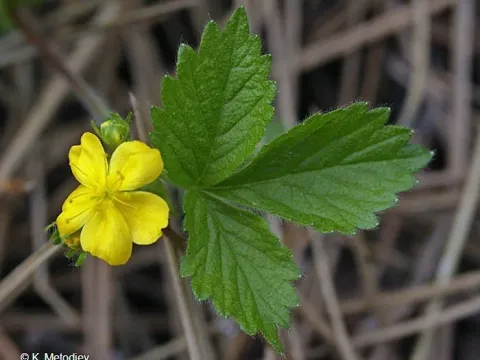
Aremonia
Aremonia
Aremonia (Aremonia agrimonoides) is a perennial herbaceous plant belonging to the Rosaceae family. It is a monotypic genus native to the forested regions of Central and Southern Europe.
What the section contains

Aremonia
This crop prefers moist, fertile, and well-drained soils. One of its key botanical features is high shade tolerance, making it an excellent choice for woodland gardens or shaded areas where sunlight is limited.
The plant forms a basal rosette of leaves and produces small, inconspicuous flowers on upright stalks. It is winter-hardy and requires minimal intervention once established in a suitable environment.
In horticultural practice, Aremonia is mainly used as a ground cover plant. It spreads effectively, creating a dense green mat that suppresses weed growth and maintains soil moisture levels throughout the growing season.
Cultivation requires regular monitoring of soil moisture during the first year. Propagation is best achieved by dividing mature clumps in early spring or autumn to ensure successful establishment.
Like many members of the Rosaceae family, Aremonia is susceptible to fungal issues such as powdery mildew, especially if planted in areas with poor air circulation or excessive humidity.
Pests such as aphids and various leaf-eating insects may occasionally infest the plants. Integrated pest management, focusing on monitoring and biological control, is recommended for healthy growth.
Waterlogging is a significant threat, as it can lead to root rot and other soil-borne diseases. Ensuring proper drainage is crucial for the long-term health of the plant.
Planting density should be managed to avoid overcrowding. Proper spacing allows for natural airflow, which significantly reduces the risk of fungal infections spreading across the plantation.
If severe pest pressure occurs, manual removal or the application of organic horticultural soap is preferred over heavy chemical treatments to protect the surrounding ecosystem.