
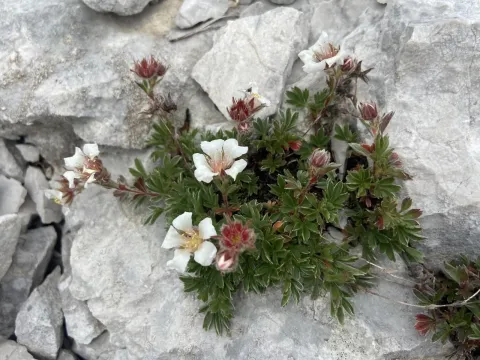
Clusius' cinquefoil
Potentilla clusiana
Clusius' cinquefoil (Potentilla clusiana) is a dwarf perennial herbaceous plant belonging to the Rosaceae family. Native to the limestone mountains of the Eastern Alps, it has evolved to thrive in specialized alpine environments and high-altitude rocky crevices.
What the section contains
Clusius' cinquefoil
Botanically, the plant is characterized by its cushion-forming habit, which serves as an adaptation to high wind speeds and thermal fluctuations. Its leaves are palmate, leathery, and possess a distinct pubescence on the underside, aiding in moisture conservation during dry spells.
The cultivation requirements for this species are strict, demanding well-draining, calcareous soil. To prevent root rot in a garden setting, it is essential to mimic its natural scree habitat by ensuring a porous substrate with significant grit content.
Climatically, the plant thrives in cooler conditions, making it an excellent choice for northern climates or specialized alpine houses. It requires full sunlight to partial shade, provided that the location offers ample airflow to keep the foliage dry.
Regarding its horticultural use, Clusius' cinquefoil is primarily valued as a high-end decorative plant for rock gardens and troughs. Its slow growth rate makes it a long-lived specimen that provides delicate, white, saucer-shaped flowers in the late spring and early summer.
Fungal diseases, particularly root and crown rot, represent the most significant threat to the survival of this species. These are usually triggered by poor drainage or excessive soil moisture levels during dormant periods.
Spider mites are the most common pests that affect the foliage, especially when the plants are grown in confined or overly warm environments. If left unchecked, they can cause significant discoloration and reduction of plant vigor.
Leaf-eating insects such as snails and slugs can cause cosmetic and structural damage during the early growing season. Maintaining a clean cultivation area and using physical deterrents can mitigate these risks effectively.
Competition from more aggressive, fast-growing weeds can quickly overwhelm this slow-growing alpine. Regular manual weeding is mandatory to ensure the plant receives sufficient light and nutrients without being crowded by larger species.
Nutrient toxicity, often resulting from excessive use of mineral fertilizers, can lead to scorched roots and inhibited flowering. It is recommended to use only minimal, slow-release top-dressings designed specifically for alpine plant collections.