
Garden strawberry
Fragaria ananassa x Fragaria moschata
Description
Sowing dates
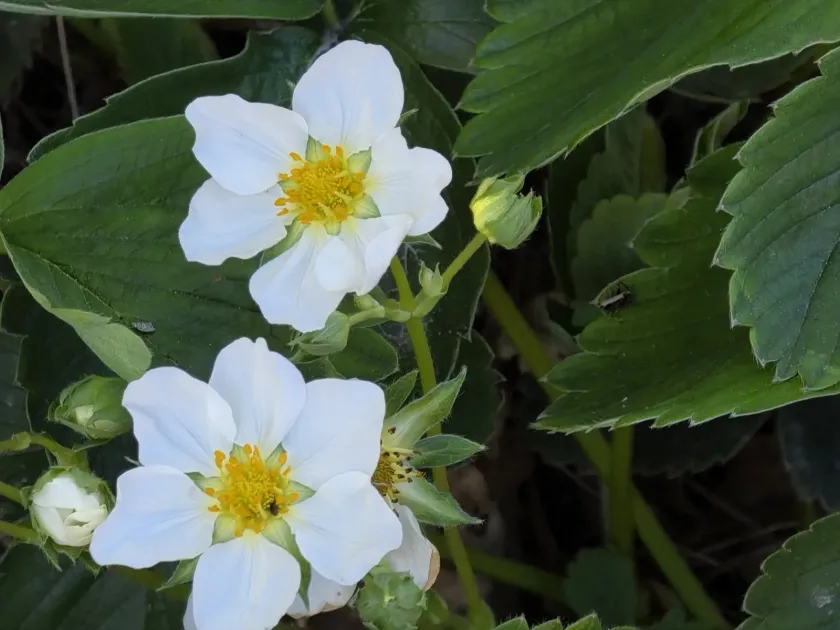
Garden strawberry, botanically known as Fragaria ananassa, is a widely cultivated hybrid species of the genus Fragaria, belonging to the Rosaceae family. It was developed in Europe during the 18th century as a cross between American wild species.
The plant grows as a perennial rosette of leaves from which flowering stalks and vegetative runners (stolons) emerge. Its root system is shallow, predominantly occupying the top 20-30 centimeters of the soil profile.
The optimal planting window is generally in late summer or early autumn, which allows plants to establish their root systems before the onset of winter dormancy. Spring planting is also viable, especially when using high-quality nursery transplants.
Proper spacing is crucial to ensure airflow and sunlight penetration, which helps mitigate moisture-related diseases. Rows are typically spaced to allow for ease of cultivation and efficient harvesting.
Field preparation involves enriching the soil with organic matter and adjusting the nutritional balance. A well-prepared bed serves as the foundation for the plant’s productivity over the coming years.
Growing requirements
Strawberries require full sun exposure, ideally receiving at least six to eight hours of direct light daily. Adequate light is essential for fruit sugar accumulation and overall plant vigor.
Well-drained, sandy loam soils with high organic content are preferred. The crop thrives in slightly acidic conditions, typically targeting a pH range of 5.5 to 6.5 to maximize nutrient availability.
Consistent moisture management is vital throughout the growing cycle. While the plants need frequent watering, waterlogging should be strictly avoided to prevent crown and root rot pathogens.
Temperature regulation plays a significant role, particularly in colder climates where winter protection is necessary. Mulching with straw helps insulate roots and keeps berries clean.
Fertilization regimes should be split into phases: balanced inputs during early growth and phosphorus-potassium focused applications during fruit set to enhance berry quality and plant health.
Yield
Crop yields vary significantly based on the chosen cultivar and management intensity. Modern commercial operations can achieve high yields, often ranging from 15 to 40 tonnes per hectare.
The economic life of a strawberry planting usually spans three to four seasons. Productivity naturally declines as the plants age, necessitating a cyclical rotation to maintain profitability.
Choosing between June-bearing (single harvest) and day-neutral (everbearing) cultivars allows growers to match their production schedule with market demands and climatic capabilities.
Effective runner management is a key agronomical practice. By removing excess runners, the plant directs its energy reserves toward the development of buds and fruit, resulting in larger, higher-quality berries.
Quality indicators, such as shelf life, firmness, and soluble solids content, are critical for commercial success. Careful attention to nutrient ratios directly impacts these harvest parameters.
Main diseases and pests
Fungal diseases are the primary threat to strawberry productivity. Gray mold (Botrytis cinerea) and powdery mildew are notorious for causing significant yield losses, especially under humid conditions.
Root-damaging pathogens, such as Phytophthora, are particularly problematic in poorly drained soils. Adherence to strict crop rotation practices is necessary to break the infection cycle of soil-borne diseases.
Pests like the strawberry mite and various weevils can severely impact plant health. Integrated Pest Management (IPM) strategies, combining biological and selective chemical controls, are the industry standard.
- Use of certified, virus-free planting stock.
- Strategic use of mulching to prevent direct soil-fruit contact.
- Maintaining optimal row spacing for better air circulation.
- Timely removal of diseased plant tissues to reduce inoculum.
- Implementing rigorous hygiene practices on the farm.
Proactive monitoring allows growers to intervene before a pest or disease outbreak becomes uncontrollable. Early detection remains the most effective tool in the strawberry grower's arsenal.
Harvesting
Harvesting is a delicate process due to the perishable nature of the fruit. Manual picking is the industry standard to ensure the integrity of the berries and the preservation of the calyx.
The timing of the harvest is critical; fruit should be picked when they reach the desired maturity stage for the target market. Rapid cooling is essential to stop the ripening process post-harvest.
Berries should be packed in containers that allow for adequate ventilation to minimize the risk of moisture build-up and fungal development within the package during transit.
Regular harvesting cycles, often every other day during peak season, are necessary to prevent over-ripening and the development of cull fruit. Consistent pickings also encourage further production.
Cold chain management, maintaining temperatures between 2 and 4 degrees Celsius, is vital for extending the shelf life of the berries and ensuring they reach the consumer in peak condition.