
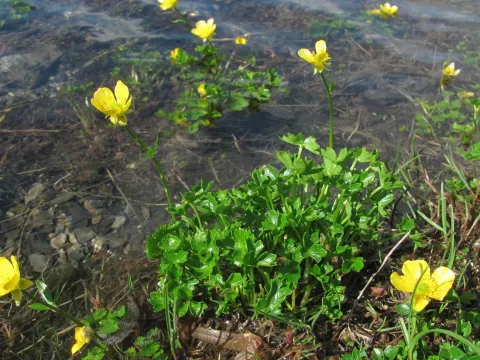
Ranunculus crassifolius
Ranunculus crassifolius
Ranunculus crassifolius is a perennial herbaceous plant belonging to the Ranunculaceae family. For agricultural purposes, sowing should take place in early spring when the soil temperature consistently reaches 10–12°C. The seeds are small and require surface sowing to ensure adequate light exposure for germination.
What the section contains
Ranunculus crassifolius
Prior to sowing, the soil must be prepared to a fine tilth. Incorporating organic matter into the top layer helps retain the moisture that this species requires. Sowing density should be managed to prevent overcrowding, which can hinder the plant's development in its first year.
Seeds benefit from a cold stratification period to break dormancy. In commercial settings, precision seeding tools are recommended to ensure uniform spacing, which is crucial for maximizing yield and easing later maintenance tasks.
It is vital to keep the seedbed consistently moist throughout the germination phase. Drying out at this critical stage will significantly reduce the emergence rate. Using a light mulch cover can assist in maintaining humidity levels at the soil surface.
Rows should be spaced at approximately 30–40 cm intervals. This allows for efficient weed management and ensures adequate airflow between plants, which is essential for mitigating the risk of fungal pathogens in high-moisture environments.
The primary requirement for Ranunculus crassifolius is a consistent water supply. It thrives in loamy or clay-based soils with a high water table. This makes it an ideal crop for wetlands or fields that are prone to periodic saturation.
The climate should be temperate, as the plant does not tolerate extreme heat or prolonged drought. Optimal soil pH ranges between 6.0 and 7.0. If the soil is too acidic, amending it with lime is necessary for optimal nutrient uptake.
Full sun is preferred, though the plant is capable of surviving in partial shade. Excessive shade, however, leads to etiolation, where the stems become weak and the plant's overall vitality decreases significantly.
Agronomic management involves maintaining high levels of soil fertility. Split applications of balanced fertilizers are recommended to support sustained growth throughout the season without risking soil salinity issues.
Drainage management is paradoxical for this species; while it loves water, stagnant water coupled with high temperatures can lead to root hypoxia. Maintaining slight movement of water in the root zone is ideal for long-term crop health.
The main threats to this crop include fungal infections such as powdery mildew and root rot. These diseases are most prevalent in conditions of poor air circulation and excessive humidity. Regular thinning of dense plant clusters is the best preventative measure.
Slugs and snails are the most significant invertebrate pests, as they consume the foliage of the plant. Integrated pest management strategies, such as using physical barriers or specific biological controls, are effective in minimizing losses.
Aphids may infest the plant during the flowering stage, draining sap and potentially spreading viral infections. Routine monitoring and the use of targeted biological insecticides can help manage these populations effectively.
Wireworms can be a problem if the crop is established in previously uncultivated soil. Soil testing and pre-planting treatments are recommended to reduce the risk of subterranean pest pressure on the developing root systems.
Early identification of infected plants is crucial. Any plants showing signs of wilt or strange discoloration should be removed and destroyed to prevent the spread of disease within the entire cultivated block.