
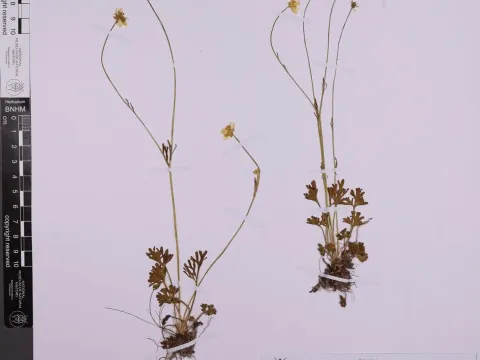
Ranunculus gracilis
Ranunculus gracilis
Seeds of Ranunculus gracilis are typically sown in a controlled environment, such as a greenhouse, in late winter to ensure strong seedling development.
What the section contains
Ranunculus gracilis
The planting medium must be fine-textured and well-draining to accommodate the small size of the seeds and prevent early damping-off issues.
Cold stratification for several weeks is a critical biological requirement that helps break seed dormancy and ensures uniform germination rates.
Direct outdoor sowing should only occur once all danger of frost has passed, as the young plants are highly sensitive to sudden temperature fluctuations.
Proper spacing is essential for air circulation; maintaining at least 20 cm between plants helps mitigate the spread of moisture-related pathogens.
Ranunculus gracilis is an herbaceous perennial plant belonging to the Ranunculaceae family, valued for its unique botanical profile and aesthetic appeal.
The plant thrives in fertile, loamy soils that maintain moisture without becoming waterlogged, ideally with a pH level between 6.0 and 7.0.
Regarding climatic conditions, it prefers temperate environments and performs best in locations that offer full morning sun with partial afternoon shade.
Balanced fertilization with macro and micronutrients is recommended during the peak vegetative phase to support the formation of robust flower stalks.
Efficient water management is the cornerstone of successful cultivation, as the root system is highly susceptible to decay in saturated environments.
Powdery mildew is a prevalent issue for this crop, often appearing as a white fungal dusting on the foliage during periods of high humidity.
Root rot caused by various soil-borne pathogens remains a significant threat, usually stemming from over-irrigation or inadequate soil aeration.
Pests such as aphids and spider mites frequently target the succulent stems, which can lead to stunted growth and reduced photosynthetic capacity.
Integrated pest management, including biological controls and regular field monitoring, is necessary to maintain crop health throughout the season.
Sanitation practices, including the removal of infected plant debris, are vital to prevent the carryover of diseases into subsequent growing cycles.
Commercial harvesting of the flowers occurs when the buds are partially opened, ensuring a longer vase life for the final consumer product.
Stems should be cut using sanitized equipment during the coolest part of the day to prevent moisture stress and preserve the flower's structural integrity.
Seed harvesting requires careful timing, as the capsules must be fully mature on the stem before collection to ensure high viability of the seeds.
Post-harvest handling of tubers involves thorough cleaning and curing in a cool, dry area to prepare them for successful long-term storage.
Storage facilities for the bulbs must maintain consistent, low-temperature conditions with active ventilation to avoid fungal proliferation during dormancy.