
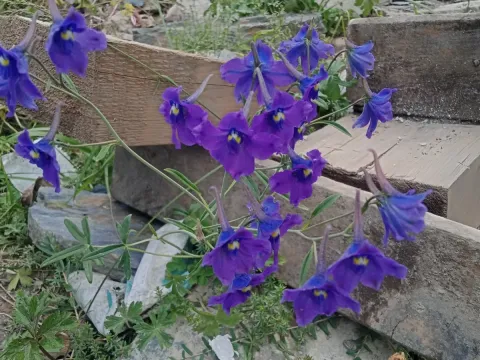
Delphinium kamaonense
Delphinium kamaonense
Delphinium kamaonense is a perennial herbaceous species belonging to the Ranunculaceae family. It is a true alpine plant, native to the high-altitude regions of the Himalayas, specifically found in the Kumaon region, where it thrives in rocky, mountainous terrains.
What the section contains
Delphinium kamaonense
The culture requires a specific microclimate characterized by cool temperatures and significant air circulation. It does not tolerate the heat and humidity of low-lying plains, making it a challenging plant to cultivate outside of its natural high-altitude environment or specialized alpine gardens.
Soil requirements are strict: the substrate must be well-drained, porous, and nutrient-balanced. Clay-heavy soils that retain water are detrimental to the root system, often leading to rapid decay, so gardeners often incorporate gravel or sand to improve drainage.
Botanically, this species is distinguished by its deep-lobed leaves and erect floral stalks that produce characteristic flowers. It exhibits slow growth, which is a common evolutionary adaptation for plants living at extreme elevations where the growing season is short.
Its primary use is ornamental, specifically in rock gardens and specialized alpine collections. Because of its rarity and difficulty in cultivation, it is highly sought after by botanical enthusiasts who wish to preserve and study rare Himalayan flora in controlled settings.
Root rot is the most significant threat to Delphinium kamaonense, usually triggered by improper moisture management. In poorly drained soils, the crown and roots are highly susceptible to fungal pathogens that thrive in wet conditions, leading to the rapid loss of the plant.
Powdery mildew represents a major foliage disease, especially in stagnant or humid air. Regular inspection of the leaves and ensuring that the plant is not overcrowded can significantly reduce the incidence of this white, dusty fungal growth during the warmer months.
Slugs and snails are common garden pests that find the succulent young growth of the delphinium highly attractive. Protecting the plants during their early stages of growth is essential to prevent severe damage to the foliage and potential stunting of the plant.
Aphids can pose a challenge by colonizing the tender floral buds and stems. While they are usually a minor nuisance, a large infestation can weaken the plant and reduce its aesthetic appeal, requiring the use of mild horticultural soaps or systemic insecticides for control.
Root nematodes are another concern for this species, as they can cause systemic weakening. Prevention involves using sterilized soil or high-quality compost and strictly monitoring the health of the plants, as infested specimens should be removed to prevent spread to neighboring plants.