
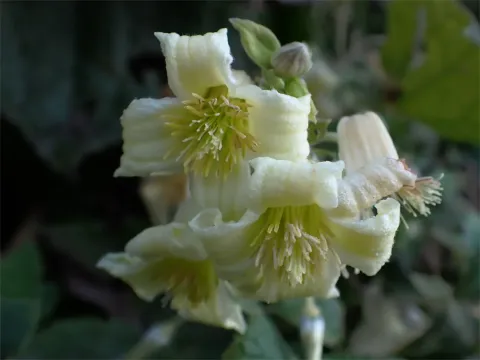
Buchanan's Clematis
Clematis buchananiana
Buchanan's Clematis (Clematis buchananiana) belongs to the Ranunculaceae family. It is a robust perennial climber native to the high-altitude regions of the Himalayas and parts of Southeast Asia.
What the section contains
Buchanan's Clematis
The plant thrives in sites that offer morning sun and afternoon shade for its roots. It requires well-drained, humus-rich soil with a neutral to slightly alkaline pH level to flourish.
As a climbing species, it demands sturdy structural support, such as trellises or walls, to facilitate upward growth and healthy aeration of the foliage.
Botanically, it is distinguished by its pinnate leaves and unique bell-shaped, cream-to-yellow flowers, which bloom profusely during the growing season.
Proper agricultural practice includes a consistent watering schedule and mulching the root zone to retain moisture, coupled with strategic pruning to maintain a manageable plant shape.
The most significant threat to this species is Clematis wilt, a fungal infection that can cause sudden collapse of stems if the plant's vascular system is compromised.
Powdery mildew is a common occurrence in dense plantings, particularly during warm and humid weather conditions that hinder effective airflow between stems.
Pests such as aphids and spider mites can infest the soft tips of new growth, leading to stunted development and yellowing of the leaves if left untreated.
Root-knot nematodes may also impact vigor in certain soil types, making soil health management and the use of healthy, disease-free nursery stock essential.
Preventative care involving balanced fertilization and the application of fungicides during the early stages of spring growth is highly recommended for long-term health.