
Cheilanthes guanchica
Cheilanthes guanchica
Description
Growing requirements
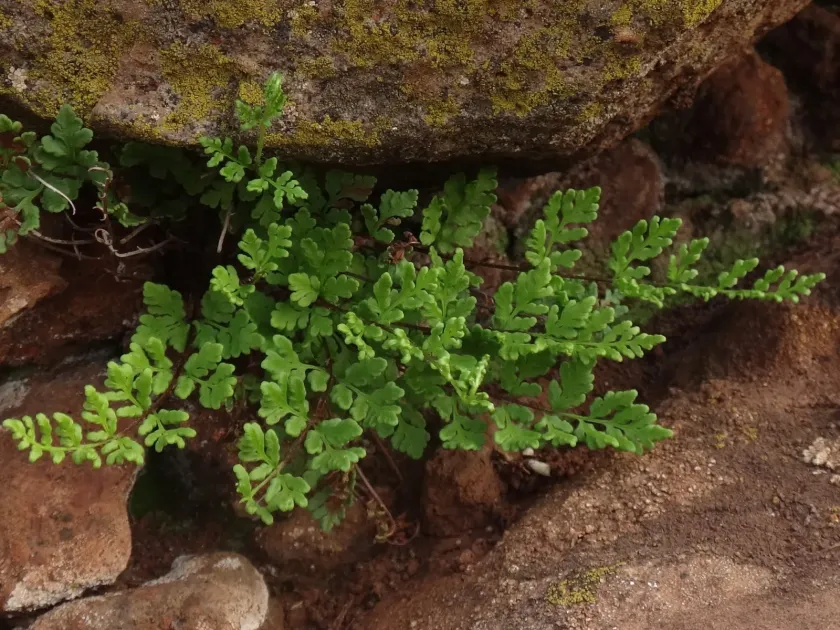
Cheilanthes guanchica is a perennial fern belonging to the Pteridaceae family. Naturally found in rocky crevices across the Mediterranean and Canary Islands, it is uniquely adapted to thrive in environments that would be inhospitable to most other fern species.
The plant exhibits a xerophytic growth habit, meaning it is biologically prepared to withstand long periods of drought. Its fronds are often covered in small scales or fine hairs, which help to reduce moisture loss through transpiration under intense sunlight.
Regarding soil requirements, this fern demands a highly porous, gritty medium. A blend of perlite, limestone chippings, and minimal organic matter is necessary to prevent compaction, ensuring the roots have access to air and excess water drains away rapidly.
Temperature management is critical for the long-term health of Cheilanthes guanchica. While it tolerates warmth, it prefers cooler nighttime temperatures. In temperate climates, it must be protected from frost and should be kept in a bright, well-ventilated area throughout the year.
In terms of usage, this plant is primarily valued by enthusiasts and collectors of rare ferns. It serves as an excellent specimen for Mediterranean-style rock gardens, dry-stone walls, or as a distinctive, low-maintenance ornamental plant in indoor pots.
Main diseases and pests
The most significant threat to Cheilanthes guanchica is root rot caused by poor drainage and waterlogged soil. Once fungal pathogens establish themselves in the root zone, the recovery rate for the plant is extremely low, often leading to rapid decline.
Common household pests, particularly spider mites, thrive in the dry conditions that this fern enjoys. These mites feed on the underside of the fronds, leading to stippling and eventual leaf drop, which diminishes the ornamental value of the specimen.
High humidity combined with stagnant air can also trigger leaf spot diseases. It is essential to ensure a constant movement of air around the plant, especially during the wetter months of the year, to prevent the proliferation of pathogenic bacteria and fungi.
Over-fertilization represents a major cultural mistake. As a species adapted to nutrient-poor rocky niches, it does not respond well to high doses of nitrogen. Excessive fertilization leads to soft, weak growth that becomes a magnet for sucking insects.
Finally, improper handling during repotting can damage the fragile rhizomes. Any mechanical injury to the root system provides an entry point for soil-borne diseases, so care must be taken to minimize disturbance when upgrading the plant to a larger container.