
Woolly lip fern
Cheilanthes lanosa
Description
Growing requirements
The woolly lip fern, known scientifically as Cheilanthes lanosa, belongs to the Pteridaceae family. It is a resilient perennial species native to rocky habitats and dry, sun-exposed crevices.
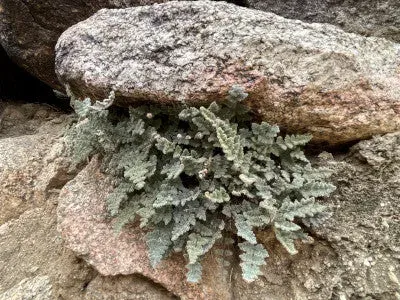
The plant exhibits remarkable xerophytic adaptations, characterized by small leaflets covered in dense, woolly hairs that serve to reflect sunlight and minimize transpiration.
For successful growth, it requires a specialized planting medium, typically a mixture of grit, sand, and organic matter that mimics its natural, well-draining rocky environment.
This species thrives in full to partial sun, requiring significant light exposure to maintain its compact habit and prevent the leggy, weakened growth associated with shade.
Water management is critical; the root zone must remain relatively dry, and the substrate should be allowed to dry out significantly between watering sessions to avoid hypoxia.
Main diseases and pests
The most significant threat to Cheilanthes lanosa is poor soil drainage, which quickly leads to crown and root rot, often resulting in the loss of the entire plant.
High humidity combined with stagnant air circulation can foster the development of various fungal pathogens, which manifest as dark spots on the foliage and stem decay.
Spider mites are the most common pest, particularly in environments with low humidity, where they target the undersides of the leaves to sap moisture and nutrients.
Aphids can occasionally infest the plant, clustering on the developing fronds and causing distortion, which diminishes the ornamental value of the fern.
Control measures emphasize cultural practices, such as providing consistent airflow and avoiding overhead irrigation, to keep the foliage dry and healthy throughout the season.