
Spanish lip fern
Cheilanthes hispanica
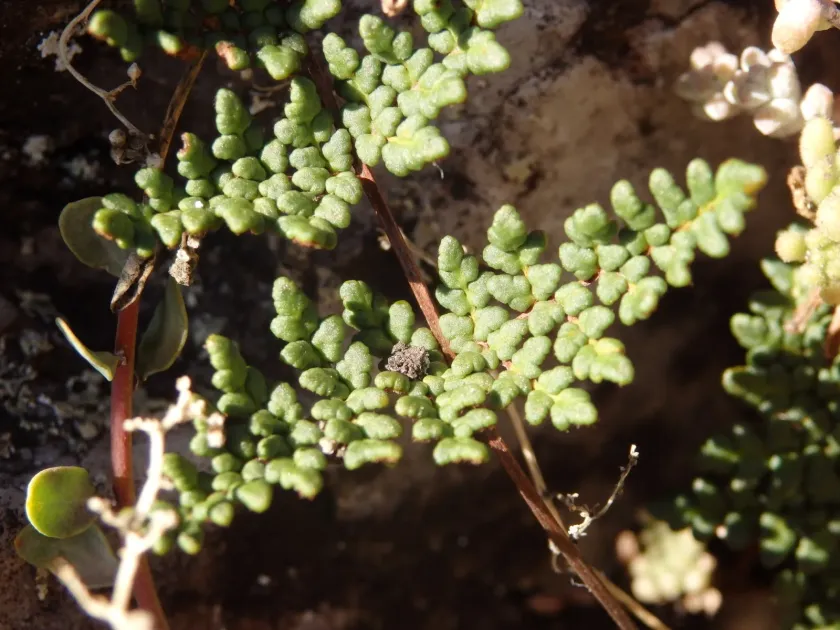
Description
Growing requirements
The Spanish lip fern (Cheilanthes hispanica) belongs to the Pteridaceae family and represents a unique group of rock-dwelling ferns. It is a perennial plant known for its remarkable ability to survive in arid environments, which sets it apart from many other moisture-loving fern species.
Originating from the rocky terrains of the Iberian Peninsula, this fern has evolved to survive in nutrient-poor environments. Its natural habitat includes crevices and stony slopes, making it a highly resilient candidate for xeriscaping or rock garden projects.
Soil requirements for this species are specific: it demands a highly porous, gritty substrate that ensures rapid drainage. A mixture containing sand, gravel, and organic material is ideal, as it prevents root suffocation and promotes healthy rhizome development.
Regarding climate, the plant thrives in conditions that provide bright, filtered light. While it is naturally tolerant of sun exposure, it performs best in positions where it can avoid the scorching midday heat, which can otherwise bleach its delicate fronds.
The cultural cycle includes an active growth phase during spring and early summer, followed by a period of relative dormancy. Consistent but moderate watering is essential, ensuring the substrate dries out slightly between applications to mimic its native climatic cycles.
Main diseases and pests
The most significant threat to the Spanish lip fern is root rot caused by stagnant water. Because this species is adapted to well-drained rocky soils, waterlogging can destroy its root system within a very short period of time.
Pests such as scale insects and spider mites are frequent adversaries in controlled indoor or greenhouse environments. These pests thrive in dry air, so maintaining a balance in ambient humidity while ensuring air circulation is crucial for prevention.
Fungal leaf spot diseases can develop if the foliage remains wet for extended periods. It is important to water at the base of the plant and maintain sufficient airflow to ensure that fronds remain dry and healthy throughout the day.
Yellowing of the fronds, or chlorosis, often indicates improper pH levels in the substrate or the use of hard water. Using filtered or rainwater for irrigation can significantly improve the plant's overall vigor and maintain the deep green color of its foliage.
Structural damage from physical contact or strong drafts can also weaken the plant. It is advisable to place the ferns in sheltered locations where they are protected from extreme weather conditions and excessive handling.