
Hydrobryum
Hydrobryum
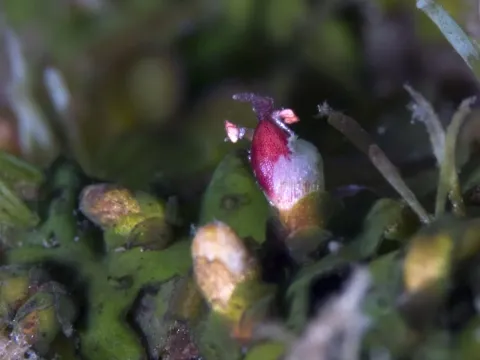
Hydrobryum is a distinct genus of aquatic plants within the Podostemaceae family. These plants are uniquely adapted to live on submerged rocks in fast-flowing tropical rivers, often displaying a thallus-like structure that anchors securely to the substrate to withstand strong currents.
What the section contains

Hydrobryum
Botanically, these plants are highly specialized. Their life cycle is closely synchronized with water levels: during the monsoon season, the vegetative phase thrives underwater, and as water levels recede, the reproductive organs emerge to facilitate flowering and seed dispersal.
The geographic distribution of Hydrobryum is primarily located in the tropical regions of Asia, specifically India and parts of Southeast Asia. They require pristine, oxygen-rich waters and a constant flow, making them sensitive indicators of river health and water quality.
Cultivation of Hydrobryum in a standard agricultural sense is currently non-existent. There is no commercial production of this genus, as its biological requirements for high-velocity water movement and specific nutrient availability make it extremely difficult to maintain outside of its natural habitat.
The economic or practical use of this genus is mainly limited to academic study. Scientists examine these plants to understand evolutionary adaptations to extreme aquatic environments, which contributes to broader knowledge of botanical biology and river ecosystem preservation.
The primary threat to Hydrobryum populations is river pollution resulting from agricultural runoff, including nitrates and pesticides. Because these plants obtain nutrients directly from the water column, they are highly vulnerable to even minor changes in water toxicity.
Dam construction and changes in river morphology pose significant risks to the survival of the genus. By altering the water flow velocity and sediment distribution, such infrastructure projects often eliminate the specific niches required for the growth and reproduction of these specialized plants.