
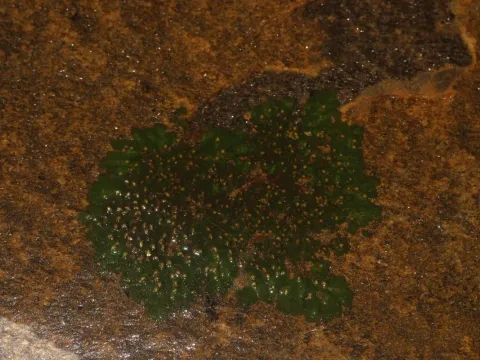
Zeylanidium
Zeylanidium
Zeylanidium is a genus of aquatic plants belonging to the family Podostemaceae. These plants are uniquely adapted to high-energy environments, specifically fast-flowing streams and rivers where they anchor themselves to rocks.
What the section contains


Zeylanidium
Native to parts of South Asia, these plants occupy a specialized ecological niche that prevents them from being cultivated as traditional agricultural crops. Their life cycle is deeply interconnected with the hydrodynamics of their natural riverine habitats.
Botanically, Zeylanidium exhibits a thalloid form, often resembling liverworts or lichens, which serves to minimize drag against strong water currents. Their morphology is an evolutionary masterpiece of adaptation to rocky substrates in turbulent waters.
These plants are considered bioindicators, meaning their presence is a testament to the high water quality and oxygen saturation of the stream. They do not have commercial use in cultivation, as they cannot survive outside their complex natural microclimate.
Environmental requirements include clear, fast-moving, and oxygen-rich water. Given their sensitivity to environmental changes, they are often the subject of conservation studies rather than agricultural research, highlighting their importance in aquatic biodiversity.