
Indotristicha
Indotristicha
Indotristicha is a specialized genus of aquatic plants belonging to the family Podostemaceae. These plants have evolved to thrive in highly specific and demanding environments, typically found in tropical river systems with strong currents.
What the section contains

Indotristicha
The genus is primarily distributed throughout the Indian subcontinent and parts of Southeast Asia. These plants are known to colonize rock surfaces in fast-flowing streams and waterfalls, where high oxygen levels are essential for their survival.
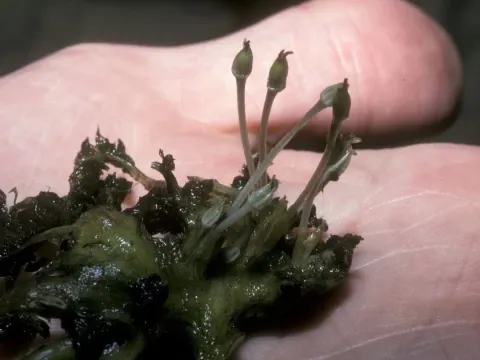
Botanically, Indotristicha lacks traditional stems, leaves, and roots. Instead, it features a thalloid structure that adheres firmly to rocky substrates. This adaptation allows the plant to withstand the intense hydraulic pressure of flowing water during monsoon seasons.
Requirements for the plant include pristine, fast-flowing water with low turbidity and high dissolved oxygen. Because of its extremely narrow ecological niche, it is not cultivated as a conventional agricultural crop, though it remains a subject of intense botanical interest.
Ecologically, the plant acts as a vital component of riverine ecosystems. It provides a niche for diverse aquatic microfauna, supports biodiversity, and functions as a biological indicator of water quality in the streams where it establishes its colonies.
The primary threat to Indotristicha populations is the alteration of river morphology due to human activities. The construction of dams and hydroelectric power plants disrupts the natural flow regimes, leading to the loss of suitable habitats.
Water pollution originating from agricultural runoff, industrial waste, and chemical contaminants poses a lethal risk to the plant. Being highly sensitive, Indotristicha cannot tolerate changes in the nutrient levels or the toxicity of its aquatic environment.
Sand and stone mining in riverbeds significantly degrade the physical environment necessary for the plant's attachment. Without stable, clean rocky surfaces, the plant is unable to sustain its population or propagate effectively.
Climate change, manifesting as prolonged droughts or extreme flooding events, further threatens these hydrophytes. Unseasonal drying of riverbeds during dry seasons causes the desiccation of colonies that depend on continuous water coverage.
Loss of habitat connectivity and the introduction of invasive algal species further constrain the growth of Indotristicha. Protecting the integrity of river basins is essential to prevent the extinction of this specialized botanical genus.