
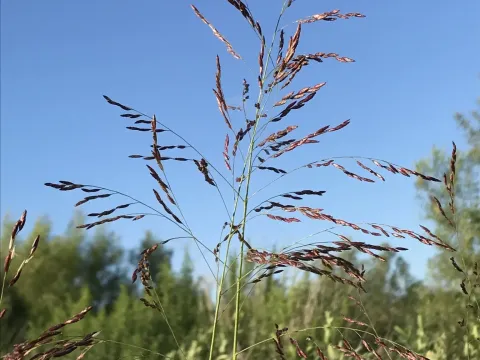
Tridens
Tridens
Tridens is a genus of perennial grasses belonging to the Poaceae family. These plants are recognized for their remarkable resilience and ability to thrive in challenging environments where other vegetation often fails to establish.
What the section contains


Tridens
The genus is native primarily to the Americas, ranging across diverse habitats from arid deserts to open grasslands. Its ability to tolerate low-moisture conditions makes it a subject of interest for sustainable agriculture and land management projects.
Regarding soil requirements, Tridens is well-adapted to poor, sandy, or rocky soils. It does not require high levels of nitrogen or complex fertilization, making it a low-input crop suitable for marginal lands that are otherwise unproductive.
Botanically, Tridens is characterized by its dense bunchgrass structure and deep, fibrous root systems. This architecture not only helps the plant survive drought but also serves as an excellent stabilizer for loose or eroded soil surfaces.
Economically, this grass is utilized mainly for forage in extensive grazing systems and as a tool for soil erosion control. Its role in re-vegetating disturbed landscapes is highly valued due to its persistent nature and low maintenance demands.
Pathogenic threats for Tridens primarily include leaf rust diseases, which can manifest under prolonged periods of high humidity. While these infections rarely threaten the survival of the stand, they can negatively impact the overall biomass quality.
Insect pests such as grasshoppers or specific aphid species may occasionally feed on the foliage. However, the plant's tough, often fibrous leaf texture acts as a natural deterrent, significantly reducing the impact of these pests compared to softer forage crops.