
Fluffgrass
Tridens pulchellus
Description
Growing requirements
Fluffgrass (Tridens pulchellus) is a perennial grass species belonging to the family Poaceae. It is native to the arid regions of the southwestern United States and northern Mexico, primarily inhabiting desert scrub communities.
This plant is highly adapted to extreme environmental stress, including intense heat and prolonged drought. It typically thrives in sandy, gravelly, or rocky soil textures that provide excellent drainage and allow for rapid root penetration.
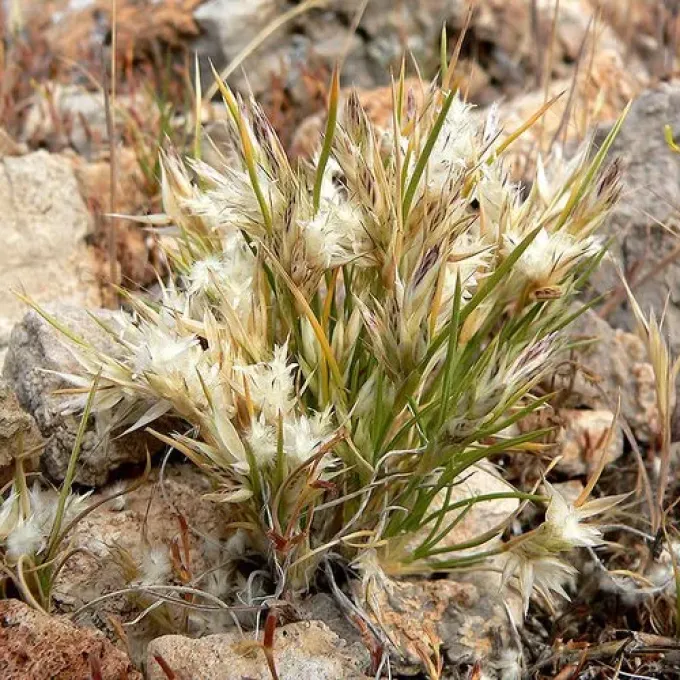
Botanically, it is a small, clump-forming grass characterized by short culms and distinctive inflorescences. The plant's morphology is evolved to conserve moisture, making it an excellent candidate for stabilization in harsh desert landscapes.
Cultivation requirements involve minimal intervention regarding fertilizers, as the plant is adapted to nutrient-poor soils. However, appropriate spacing is necessary to ensure each clump receives adequate sunlight and minimal competition from other species.
Temperature sensitivity is relatively low; the species can withstand extreme diurnal temperature fluctuations. The primary limiting factor for growth is excessive water accumulation, which can lead to rapid pathogen buildup in the rhizosphere.
Harvesting
The agricultural application of fluffgrass is primarily focused on land reclamation and erosion control. Its role in maintaining topsoil integrity makes it a valuable asset for land management in desertified areas.
While fluffgrass can be utilized as supplemental forage for livestock, it is rarely cultivated for high-yield biomass production. Its nutritional value is considered moderate, suitable for extensive grazing systems rather than intensive farming.
Harvesting for seed production is an intricate process requiring precise timing during the post-flowering stage. Due to its low growth habit, traditional harvesting machinery is generally unsuitable, necessitating specialized collection methods.
Management of this species in agro-ecosystems involves protecting existing stands from overgrazing to ensure seed bank replenishment. This approach guarantees long-term sustainability of the vegetative cover in vulnerable areas.
Future development of this culture may involve breeding for enhanced biomass production while retaining its core resilience traits. This could potentially bridge the gap between traditional grazing and sustainable desert agriculture.