
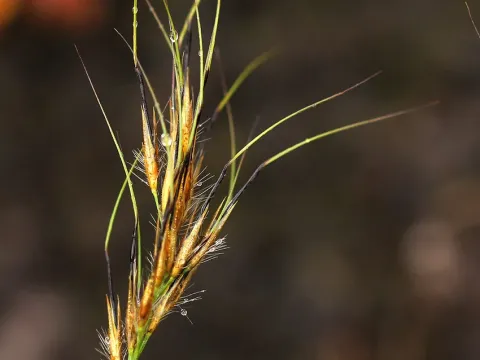
Trichopteryx
Trichopteryx
Trichopteryx is a genus of perennial grasses belonging to the Poaceae family. These plants are primarily native to tropical and subtropical regions, with a significant presence in the grasslands of Africa and Madagascar.
What the section contains

Trichopteryx
The crop thrives in well-drained soils, showing a remarkable ability to establish itself in sandy or nutrient-poor substrates. This makes it a valuable plant for soil stabilization and reclamation of marginal lands.
As a thermophilic plant, Trichopteryx requires consistent warmth to maintain physiological activity. It is highly sensitive to frost, which limits its commercial cultivation to frost-free climatic zones.
Sunlight exposure is critical for the biomass production of this genus. It performs best in open environments where solar radiation is abundant, as it does not tolerate shading by larger vegetation.
While some moisture is necessary for initial establishment, the plant demonstrates excellent drought tolerance. Its root architecture allows for deep water extraction, enabling survival during extended dry spells.
Trichopteryx is primarily utilized for livestock forage, serving as a reliable component in grazing systems. Its ability to produce fibrous biomass makes it a staple food source for herbivores in its native range.
Forage yield is highly dependent on environmental inputs, particularly rainfall and temperature stability. In managed systems, multiple harvests can be achieved if the irrigation and cutting schedules are optimized.
The nutritional quality of the grass peaks during the early vegetative phase. To maintain high protein and energy levels, harvest should be conducted prior to the onset of flowering and seed set.
When used for hay production, the cut material should be dried efficiently to prevent nutrient leaching and mold development, ensuring a high-quality product for winter or dry-season storage.
Sustainable yield management involves balancing the stocking rate on pastures to allow for sufficient plant recovery between grazing cycles, thus preventing soil compaction and degradation.
Pests such as grasshoppers and various species of caterpillars are known to cause damage to the foliage, which can significantly impact total biomass yield if left unmanaged.
Fungal diseases, specifically rusts and leaf spots, often develop under conditions of high humidity and poor ventilation within the canopy, leading to a decline in plant vigor.
Integrated pest management strategies are recommended, focusing on maintaining field sanitation and promoting air circulation to naturally inhibit the spread of fungal pathogens.
Monitoring for soil-dwelling pests is also recommended, especially in newly established stands, as root damage can weaken the plant's ability to withstand drought conditions.
- Maintain appropriate plant density to ensure air circulation.
- Regularly monitor foliage for signs of insect infestation.
- Apply balanced nutrient management to improve plant resilience.
- Implement rotational grazing to allow for vegetative recovery.