
Purpletop tridens
Tridens flavus
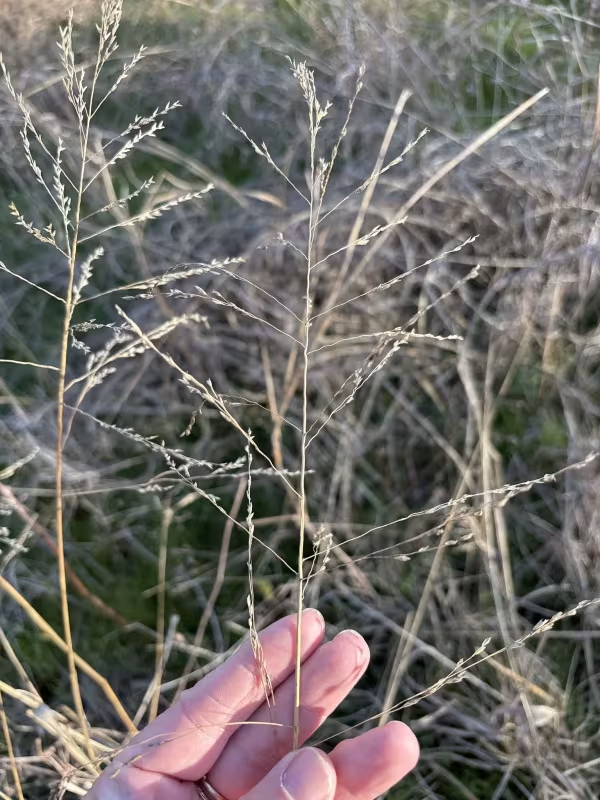
Description
Sowing dates
Purpletop tridens (Tridens flavus), a robust perennial bunchgrass, is a member of the Poaceae family native to North America. Planting is best initiated during the early spring season once the frost risk has passed.
The seeds should be sown into a well-prepared, fine-textured seedbed at a depth of approximately 1 to 2 centimeters to ensure adequate soil coverage and moisture retention.
Row spacing is typically set between 15 and 20 centimeters to allow for rapid establishment and to mitigate competition from opportunistic weeds during the initial growing phase.
Proper soil compaction after sowing is essential to establish a strong capillary connection, which promotes even and uniform germination across the entire cultivated area.
In cases where establishing the grass on depleted soils, a balanced starter fertilizer application can significantly accelerate early development and root penetration.
Growing requirements
Purpletop tridens is well-adapted to a wide range of soil types, ranging from sandy loams to heavier clay soils, provided that they have sufficient drainage.
The plant demonstrates high tolerance to varying levels of soil acidity and is known for its ability to thrive in poor, rocky sites where other species might struggle.
Optimal growth is achieved under full sun exposure, as the species requires significant light intensity to maximize its metabolic activities and structural integrity.
Water requirements are moderate, with the plant exhibiting excellent drought-tolerance mechanisms once the root system has been firmly established in the ground.
Nitrogen management is key for optimizing biomass production; regular, moderate applications of nitrogen-based nutrients throughout the season yield the best results.
Yield
The biomass yield of Purpletop tridens is highly responsive to management practices and soil fertility, often producing substantial forage for grazing systems.
Average yields can vary significantly, ranging from 4 to 7 metric tons of dry matter per hectare depending on rainfall patterns and general soil nutrient profiles.
Productivity is maximized when harvest timing aligns with the vegetative stage, before the development of overly lignified stems which can reduce feed quality.
Seed production yields are also significant, making the species an interesting candidate for conservation seed mixtures in restoration projects throughout its native range.
Multi-cut management is possible under favorable rainfall conditions, which allows for increased total annual production while maintaining the plant’s health and longevity.
Main diseases and pests
As a resilient native grass, Purpletop tridens faces few significant disease pressures in healthy, well-managed stands compared to introduced agronomic grasses.
Fungal issues, such as leaf rust, may arise in high-humidity climates or areas with stagnant air circulation, particularly in over-fertilized or overly dense stands.
In terms of insect pests, specific leaf-eating lepidopteran larvae might occasionally cause minor damage, though seldom to the extent of requiring chemical control.
Integrated Pest Management (IPM) strategies, including maintaining plant diversity and encouraging beneficial insect populations, are recommended for long-term health.
Avoidance of prolonged waterlogging remains the primary preventative measure against root-based pathogens that could undermine the stability of the stand.
Harvesting
Harvesting for forage purposes is best executed using sickle-bar or disc mowers set to a cutting height that preserves the basal buds for regrowth.
Ensuring that the harvested material is dried efficiently under favorable weather conditions is critical to prevent nutrient leaching and microbial growth.
Baling should be performed when the moisture content drops to safe levels for storage, preventing spontaneous heating and ensuring the structural quality of the hay.
In grazing applications, rotational grazing systems are highly recommended to prevent over-utilization and to promote natural reseeding of the perennial stand.
Careful management of the stubble height during the final harvest of the season prepares the plant for winter dormancy, ensuring successful survival until the following spring.