
Indian ricegrass
Oryzopsis hymenoides
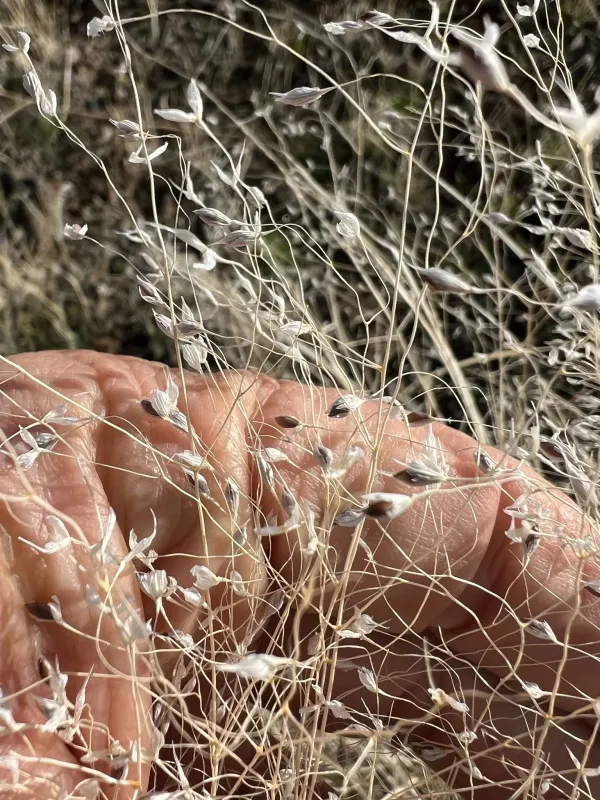
Description
Sowing dates
Indian ricegrass, scientifically known as Oryzopsis hymenoides, is typically sown in early spring or late autumn. Late autumn seeding is often more effective, as it allows the seeds to undergo a natural period of dormancy breaking and stratification in the soil.
Seeds should be planted at a depth of 1 to 2 centimeters. Ensuring proper seed-to-soil contact is crucial for germination, as the species is sensitive to the drying out of the topsoil layer during the critical establishment phase.
The optimal seeding rate depends on the intended use, such as hay production or land reclamation. A typical rate is approximately 5 to 8 kilograms of pure live seed per hectare to establish a healthy and productive stand.
If spring planting is necessary, utilizing pre-stratified seeds is highly recommended to improve germination rates. Artificial preparation of seeds overcomes the innate dormancy of the wild-type seeds, leading to more uniform stands.
Seedlings develop slowly during the first growing season. It is vital to manage weed competition during this period, as the slow-growing young plants can easily be overwhelmed by aggressive annual weeds.
Growing requirements
Indian ricegrass belongs to the Poaceae family and is native to the arid and semi-arid regions of North America. It is perfectly adapted to survive in harsh desert and prairie environments with low water availability.
The plant exhibits remarkable tolerance to extreme drought and cold. It thrives in poor, sandy, rocky, or alkaline soils that are typically unsuitable for most traditional agricultural crops.
The ideal soil pH for this species ranges from neutral to slightly alkaline. The grass is very sensitive to waterlogging; poorly drained or overly saturated soils can lead to root rot and complete stand failure.
Agronomic management requires minimal fertilizer input, as the plant has evolved to survive in low-fertility landscapes. Over-fertilization, especially with nitrogen, can reduce the plant's natural resilience to environmental stress.
For successful growth, Indian ricegrass requires full sunlight. It does not perform well in shaded areas and will quickly be outcompeted by other vegetation if the site is too productive or sheltered.
Yield
The economic value of Indian ricegrass lies in its high nutritional quality. The foliage remains palatable for livestock even after the plant has reached maturity, providing valuable late-season grazing opportunities.
Forage yield is highly dependent on precipitation levels during the winter and spring. While productivity is modest compared to irrigated crops, the nutritional consistency makes it a preferred forage species in rangelands.
The seeds of Indian ricegrass are highly nutritious and were historically a staple food for indigenous peoples. In modern agricultural settings, harvesting seeds requires precision due to their tendency to shatter upon reaching full maturity.
This grass is an excellent choice for erosion control on degraded lands. Its extensive, deep-reaching root system helps stabilize sandy soils, preventing wind erosion and supporting long-term ecological restoration.
- High crude protein content in vegetative tissues.
- Excellent late-season palatability for cattle and wildlife.
- Strong persistence in arid and semi-arid environments.
- High efficiency in soil stabilization and erosion prevention.
Main diseases and pests
Indian ricegrass has a strong natural resistance to many common fungal and bacterial diseases found in intensive agriculture. In its native arid climate, the disease pressure is generally low.
Primary threats to young stands include soil-dwelling pests that attack the root system. Regular field scouting is necessary during the establishment phase to identify and manage any localized outbreaks.
Under conditions of excessive moisture or improper humidity, plants may be susceptible to powdery mildew or rust. These occurrences are usually tied to unusual weather events or improper site selection.
Weed competition is the single greatest threat during the first year of growth. Successful management requires a clean seedbed and, where possible, selective weed control during the seedling stage.
Seed-feeding insects can significantly reduce harvest yields. Timing the harvest to coincide with the late dough stage helps to minimize seed loss from shattering and damage by birds or insect pests.