
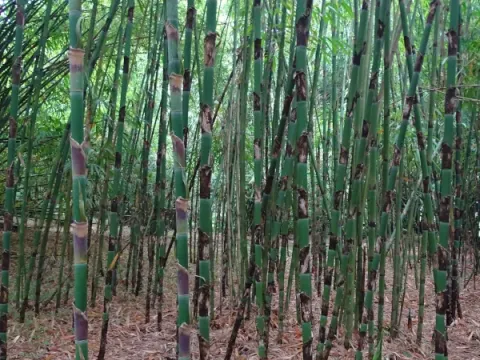
Melocanna
Melocanna
Melocanna is a genus of bamboo belonging to the Poaceae family. Unlike many bamboo species that grow in dense, tight clumps, Melocanna plants feature individual stems that spread horizontally through an extensive network of underground rhizomes.
What the section contains

Melocanna
Native to the tropical regions of South and Southeast Asia, this crop thrives in environments with high rainfall and warm temperatures. It is well-suited to the humid monsoon climates found in countries like Bangladesh, Myanmar, and India.
Optimal growth requires fertile, well-draining soils rich in organic matter. While the plant requires significant moisture to support its rapid growth, it cannot tolerate waterlogged conditions, which may lead to the decay of the underground root system.
Botanically, Melocanna is distinct due to its large, pear-shaped fleshy fruits. These seeds have a short lifespan and are typically propagated vegetatively by dividing the rhizomes to ensure successful establishment and genetic consistency in agricultural settings.
The economic potential of Melocanna is significant, primarily due to the strength and straightness of its culms. It serves as a vital resource for the paper pulp industry, construction, furniture making, and traditional handicrafts.
The most significant threat to Melocanna plantations is its biological cycle involving mass flowering, which occurs every few decades. Following the massive production of seeds, the parent plants typically perish, leading to a complete cycle of renewal.
The mass seeding event often triggers a surge in rodent populations that feed on the abundant fruit. This phenomenon can cause massive agricultural disruption and economic losses in regions where the bamboo is grown extensively.
Fungal infections pose a threat, particularly in dense plantations with poor air circulation. Proper thinning and maintenance practices are essential to reduce humidity levels within the canopy and prevent the spread of pathogens.
Stem borers and other boring insects can infest the mature culms, reducing their structural integrity and market value. Regular monitoring and the removal of infested culms are standard procedures for effective plantation management.
Sustainable agricultural practices focus on balancing the harvest of mature culms with the natural regeneration cycle of the rhizomes. Proper soil management and weed control in the initial years are critical for long-term productivity.