
Microchloa caffra
Microchloa caffra
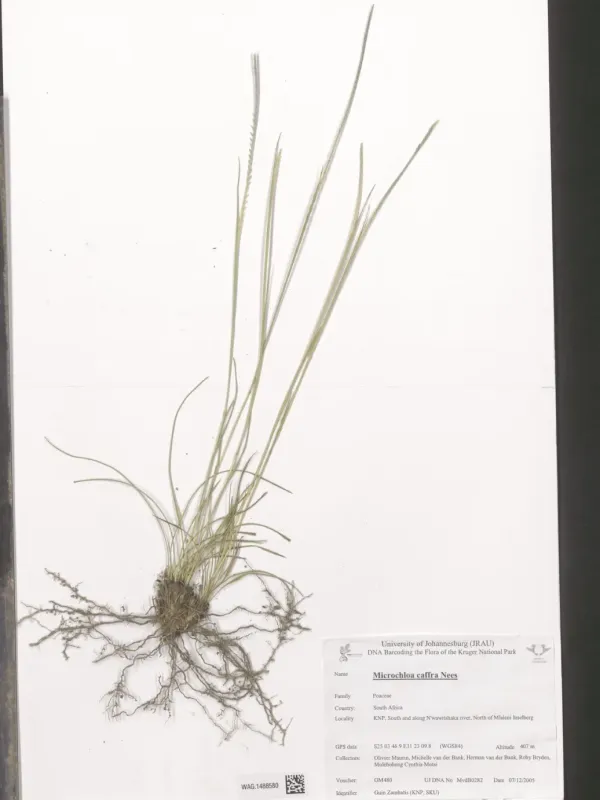
Description
Growing requirements
Microchloa caffra is a perennial grass species belonging to the Poaceae family. It is widely distributed across the tropical and subtropical regions of Africa, naturally inhabiting areas where other more sensitive forage species struggle to survive due to harsh environmental conditions.
The plant is highly regarded for its exceptional drought tolerance and its ability to thrive in poor, nutrient-deficient soils. It is particularly common in rocky or sandy substrates where drainage is efficient and the soil profile prevents long-term moisture retention.
Botanically, Microchloa caffra features slender, wiry foliage arranged in dense basal tufts. The inflorescences consist of thin, one-sided spikes that are characteristic of the genus, providing the plant with a unique aesthetic and ecological footprint within the grassland ecosystem.
Agronomically, this species requires full sun exposure and well-drained soil conditions to reach its peak development. It is an opportunistic grass, often becoming a dominant member of the ground cover in arid zones, which emphasizes its role in soil conservation efforts.
In terms of agricultural use, it serves primarily as forage for livestock. While it may not possess the high protein content of cultivated clovers or intensive rye-grasses, its resilience makes it an essential survival resource for cattle and wild ungulates in savanna-type environments.
Main diseases and pests
Potential threats include various rust diseases that often infect grasses under high humidity levels or poor air circulation. Furthermore, insect infestations, particularly locusts or grasshoppers, can significantly reduce the biomass of the pasture during the peak growth season.