
Indian microchloa
Microchloa indica
Description
Sowing dates
Indian microchloa is a grass species that typically propagates via seeds shortly after the commencement of the rainy season. In agricultural settings, seeding is best performed when the soil temperature consistently supports germination, usually following the first significant seasonal precipitation.
The seeds are small and require minimal soil cover, making surface sowing or light harrowing the most effective methods for pasture establishment. The rapid establishment phase allows the species to compete effectively with other native grasses, quickly forming a dense vegetative cover.
Growing requirements
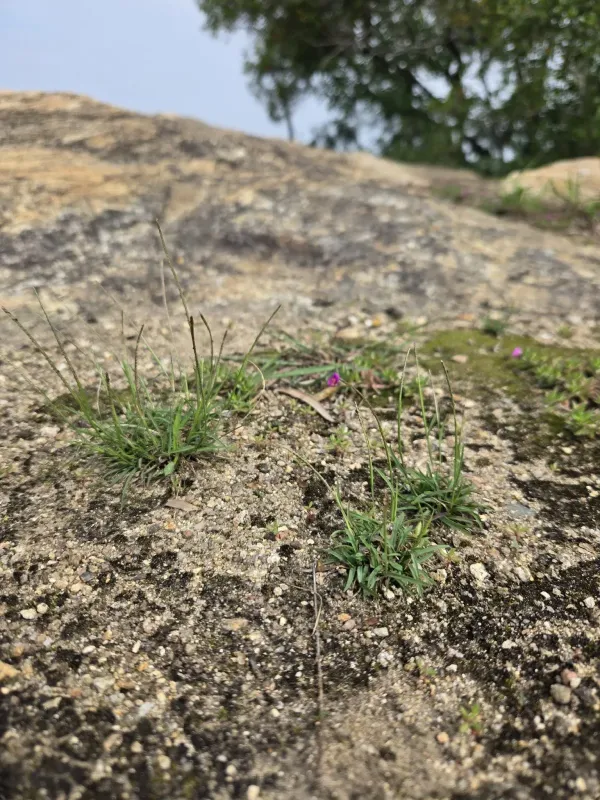
Belonging to the Poaceae family, Microchloa indica is highly adapted to nutrient-poor and rocky environments where more demanding crops fail to establish. It thrives in well-drained soils, showing a preference for sandy textures that prevent water stagnation in the root zone.
The plant requires high solar exposure to maintain metabolic activity and vegetative density. It is highly heat-tolerant, thriving in tropical conditions where temperatures frequently exceed 30 degrees Celsius, making it a reliable source of biomass in challenging thermal environments.
Although it handles drought conditions very well, Indian microchloa will show reduced growth rates during periods of prolonged water stress. However, it exhibits a unique ability to enter a dormant state, allowing for rapid recovery and green-up as soon as moisture availability improves.
Main diseases and pests
The resilience of Indian microchloa makes it relatively resistant to most major agricultural pests and diseases when grown in its native range. Nevertheless, moisture-related fungal infections, such as rusts, may appear if the canopy density is too high or if air circulation is obstructed in lower-lying areas.
Insect pressure is generally manageable, with Orthoptera species representing the most significant category of herbivores that graze on the foliage. Effective management practices usually involve rotational grazing, which helps maintain the health of the grass stand and prevents the overpopulation of specific insects.