
Mexican lovegrass
Eragrostis mexicana
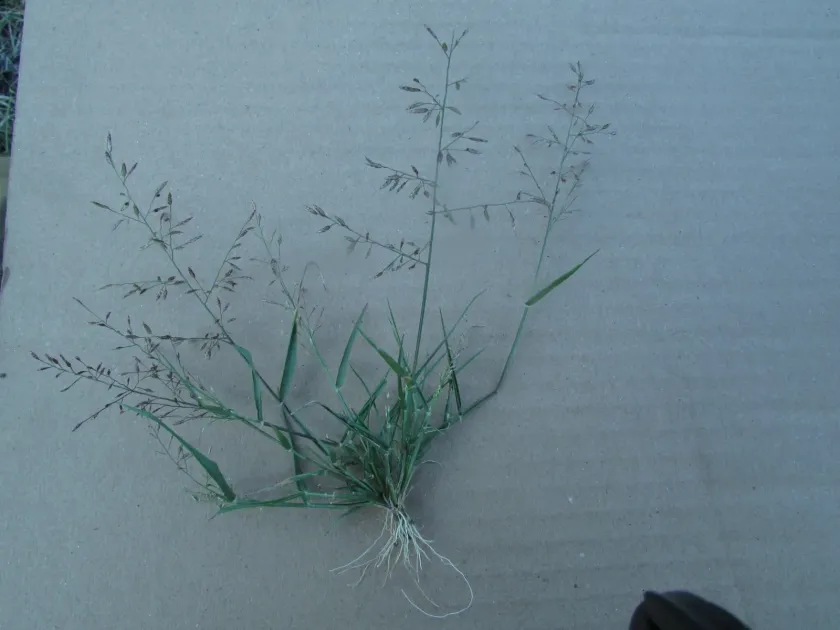
Description
Sowing dates
Sowing of Mexican lovegrass should occur when soil temperatures have reached consistent levels above 15°C. In most temperate regions, this corresponds to late spring.
The seeding rate must be carefully calibrated due to the small seed size. Utilizing precision seeders or mixing seeds with an inert carrier is recommended to ensure even distribution.
Seedbed preparation is critical; a firm, weed-free soil surface is necessary. Following the seeding process, rolling the field helps to improve seed-to-soil contact.
Minimal soil coverage is required for seeds. Covering them with more than 1.5 cm of soil often leads to emergence failure due to the plant's limited initial energy reserves.
In regions with unpredictable rainfall, timing the sowing to follow expected precipitation events significantly enhances the establishment success of the young seedlings.
Growing requirements
Mexican lovegrass, a member of the Poaceae family, thrives in warm-season conditions. It is well-known for its adaptation to arid and semi-arid environments.
The plant demonstrates high tolerance for a variety of soil textures, including coarse-textured sandy soils where other forage crops might struggle with nutrient uptake.
Optimal growth is achieved in full sunlight. The species is intolerant of shade and will suffer significant productivity drops if competed against by taller species.
While tolerant of low fertility, fertilization with nitrogen can drastically increase biomass yields, especially in soils managed for intensive hay production.
Soil pH requirements are broad, yet the plant performs best in slightly acidic to neutral soils. It shows moderate resistance to salinity levels found in many arid soils.
Main diseases and pests
Mexican lovegrass is generally considered hardy, but it can be susceptible to fungal infections during prolonged periods of high humidity and stagnant air circulation.
Root rot issues may arise if the plant is grown in compacted soils with poor drainage, which should be mitigated through proper soil management practices.
Various sucking insects and grasshoppers can cause damage to the foliage during the peak growing season, potentially reducing the overall quality of the forage.
Weed competition during the establishment phase is the primary threat to the crop. Controlling broadleaf weeds early is essential to prevent them from choking out young grasses.
Integrated pest management, including crop rotation and the use of resistant varieties, is the most effective way to maintain healthy stands over multiple years.
Harvesting
Harvesting for forage is recommended at the early flowering stage. This timing captures the optimal balance between high biomass volume and nutritional quality.
The crop can be harvested multiple times per season if water availability allows for rapid regrowth. Proper nitrogen application after the first cut supports yield recovery.
For seed production, harvesting must be timed when the seeds show early signs of maturation but before full shatter. Early harvesting is critical to minimize losses.
Proper drying of the hay is essential. Moisture levels should be monitored closely to ensure safe storage and prevent mold development in baled or stored forage.
Height of the cut is vital for long-term stand health. Leaving a residual stubble height of at least 5-8 cm encourages faster recovery and protects the crown of the plant.