
Enneapogon nigricans
Enneapogon nigricans
Description
Sowing dates
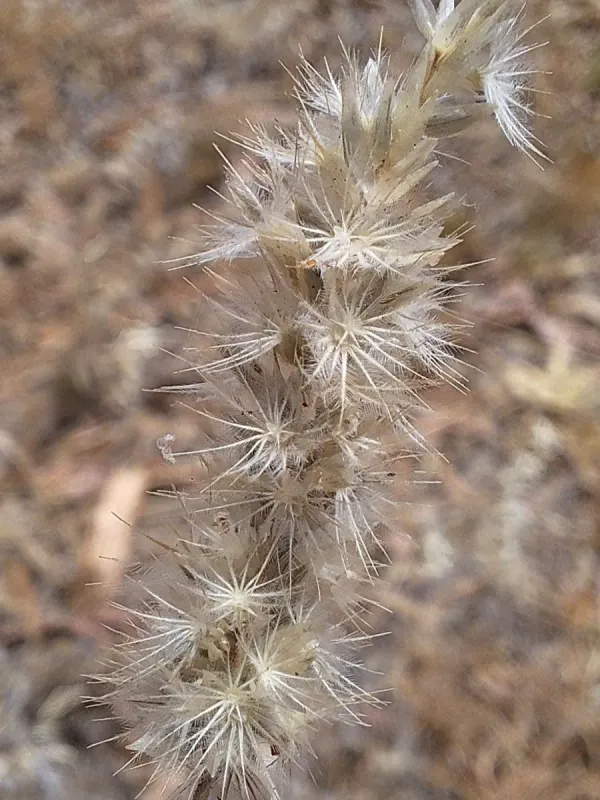
Enneapogon nigricans, commonly known as Puzzly nineawn, is a perennial grass species belonging to the Poaceae family. It is native to Australia, where it is highly valued for its ability to persist in harsh, arid, and semi-arid landscapes.
The sowing process is best executed at the onset of the wet season, allowing the seedlings to establish a deep root system before the dry period commences. Soil temperature should ideally range between 18°C and 25°C.
Due to the extremely small size of the seeds, they should be sown on or very close to the soil surface. Covering them with a thin layer of sand or fine soil is sufficient to protect them from wind erosion.
Using a drill seeder with small-seed attachments ensures an even distribution of seeds, which is vital for obtaining a uniform grass stand.
Initial irrigation may be required if the rains are delayed, ensuring that the critical germination phase is not interrupted by sudden dehydration of the substrate.
Growing requirements
This species thrives in well-drained sandy or loamy soils. It has a high tolerance for low-fertility soils, making it an excellent candidate for land reclamation projects.
Full solar exposure is essential for this grass. It does not perform well in shaded areas, as lack of light inhibits its ability to produce enough carbohydrates for winter dormancy.
Enneapogon nigricans is notably drought-tolerant, utilizing physiological mechanisms to enter metabolic dormancy when water becomes scarce, thus preventing cellular damage.
The plant demonstrates good tolerance to moderate soil salinity, which is a major advantage in regions prone to secondary salinization due to irrigation practices.
Windbreaks are not necessary, but protection from extreme erosive winds during the seedling stage can significantly improve the success rate of the establishment.
Yield
The biomass yield of Puzzly nineawn is moderate but highly reliable in environments where other grass species would fail. It provides high-quality grazing during active growth phases.
Livestock, particularly sheep and cattle, readily consume the foliage. The nutritive value is highest during the vegetative stage, containing adequate protein levels for maintenance.
Sustainable yield management involves rotational grazing, which prevents the cattle from overgrazing the base of the plant, ensuring rapid regrowth after rainfall events.
In addition to grazing, the plant acts as a vital soil stabilizer, preventing wind erosion in open pastures and helping to maintain soil structure over many years.
Annual yields depend heavily on the timing of rainfall. While it can produce significant bulk in high-rain years, its greatest value lies in its persistence and survival during dry cycles.
Main diseases and pests
Enneapogon nigricans is rarely affected by serious diseases, which is a key trait that makes it a low-maintenance agricultural crop for remote grazing areas.
Insects like locusts and grasshoppers represent the primary biological threat. Large swarms can defoliate entire pastures in a short timeframe during peak seasons.
Overgrazing is the most significant threat to the longevity of the pasture. If the plants are grazed below the crown, they lose their ability to recover and may die off, leading to bare patches.
Some soil-borne nematodes can cause localized root damage, resulting in yellowing foliage and stunted development in specific sectors of the field.
Maintaining a balanced ecosystem around the pasture, including beneficial predatory insects, helps in managing pest populations without the need for chemical intervention.
Harvesting
Seed harvesting is conducted when the inflorescences exhibit a characteristic dark, almost black, color. This indicates that the seeds have reached physiological maturity.
Direct combining is the most efficient method for commercial seed production. The harvester must be set to a low speed to avoid excessive seed damage or loss of the light, fine seeds.
Post-harvest cleaning is mandatory to remove chaff, dust, and weed seeds. Proper aeration during the drying process prevents the development of mold, which can destroy germination potential.
Storage should take place in a climate-controlled environment with humidity levels maintained below 12% to preserve seed viability for future sowing cycles.
For forage production, mechanical harvesting (haymaking) should be performed before the plant becomes overly lignified, ensuring the nutritional density is captured in the bales.