
Bottle Washers
Enneapogon avenaceus
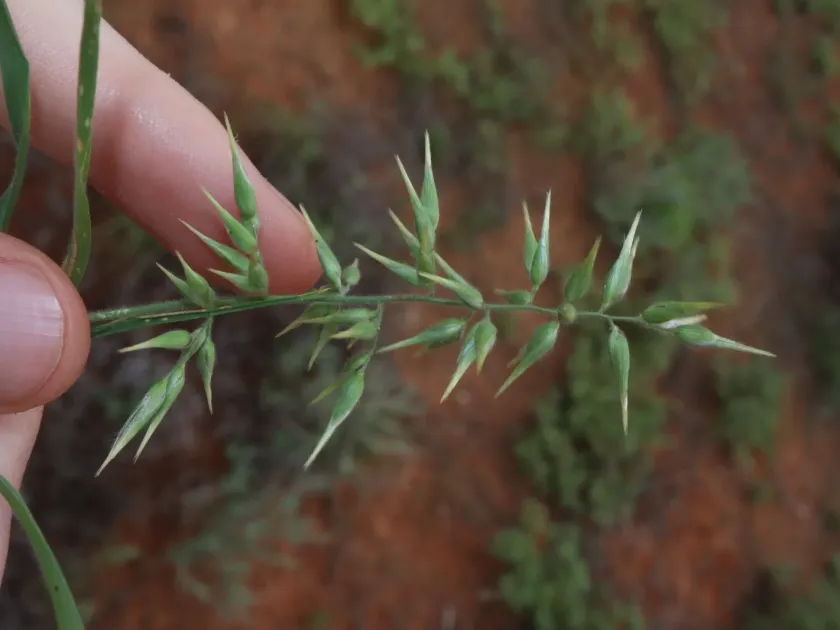
Description
Growing requirements
Enneapogon avenaceus, commonly known as Bottle Washers, is a grass species belonging to the Poaceae family. This resilient plant is well-known for its adaptation to the arid and semi-arid environments of Australia.
Originating from dry interior landscapes, this grass thrives in regions where water is a limiting factor for most other agricultural crops. Its ability to survive prolonged drought makes it a subject of interest for climate-resilient farming.
The botanical structure of the plant features thin, hairy leaves and a distinctive, dense, bottle-brush-like panicle. These physical adaptations are essential for maintaining water balance and protecting the plant from excessive heat and solar radiation.
Regarding soil requirements, the species is highly adaptable to light-textured soils including sands and sandy loams. It can tolerate saline conditions, allowing it to grow on marginal lands where more sensitive forage grasses would fail.
Agrotechnical management in rangelands focuses on sustainable grazing intensity. Because it recovers quickly after light rainfall, grazing should be managed to allow the plant to seed, ensuring the persistence of the population.
Yield
The primary economic value of Enneapogon avenaceus lies in its role as a forage source for livestock. It provides essential grazing material in regions where alternative high-quality feed sources are scarce or unavailable.
Cattle and sheep readily consume the grass during its vegetative stage. Its nutritional content, while moderate, provides necessary energy for maintaining herd health in harsh environmental conditions throughout the growing season.
Productivity is largely dictated by precipitation patterns rather than fertilization or irrigation. However, the plant's resilience ensures a base level of forage production that supports livestock operations in high-risk zones.
Beyond its feed value, the grass serves as a soil stabilizer. Its fibrous root system is effective at anchoring sandy soils, providing protection against wind erosion and preventing desertification in sensitive rangeland ecosystems.
Harvesting for seed collection is sometimes conducted to restore degraded areas. The seeds are resilient and can be stored or broadcasted to promote the regrowth of natural vegetation on overgrazed land.