
Enneapogon persicus
Enneapogon persicus
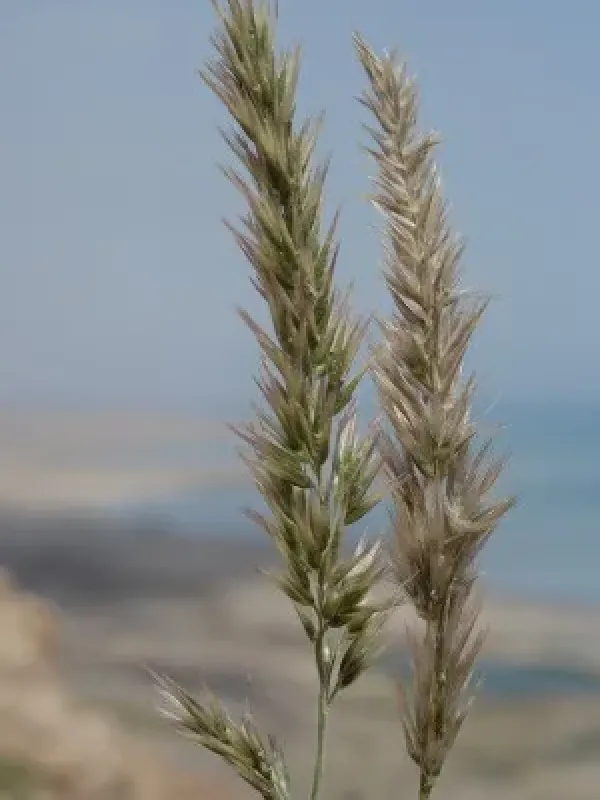
Description
Sowing dates
Enneapogon persicus is a perennial grass species that propagates naturally through wind-dispersed seeds following seasonal moisture events.
When sowing for land restoration, the ideal time is just before the onset of the rainy season to ensure sufficient soil moisture for germination.
The seeds should be sown at a shallow depth, as the small size of the seeds makes deep burial a significant barrier to successful establishment.
The species demonstrates strong self-seeding capabilities, allowing it to maintain healthy stands over time without the need for constant re-seeding.
Successful establishment depends on minimal soil disturbance and the protection of early-stage seedlings from competition with invasive weeds.
Growing requirements
This grass is a hardy xerophyte, evolutionarily adapted to the harsh, high-temperature, and low-precipitation environments of the Middle East.
It thrives in diverse soil types, including sandy, gravelly, and rocky terrain, and is notably tolerant of moderate levels of soil salinity.
Full sun exposure is a non-negotiable requirement for this plant, as it fails to produce adequate biomass under any form of shading.
The plant possesses a robust and deep root system, which allows it to tap into moisture reserves inaccessible to shallower-rooted species.
Temperature fluctuations, common in desert and semi-desert biomes, do not hinder its physiological processes; rather, it is well-adapted to extreme shifts.
Yield
The biomass yield of Enneapogon persicus is directly linked to the annual rainfall pattern and is typically moderate compared to irrigated crops.
It serves as a critical source of forage for livestock in arid regions, providing essential grazing during the lean seasons.
When managed as a grazing resource, rotational stocking rates must be maintained to ensure the plant remains productive throughout the cycle.
Its nutritional value is highest during the vegetative growth phase, providing a balanced diet for small ruminants like sheep and goats.
Effective management focuses on avoiding overgrazing to prevent the thinning of the stand and to encourage strong post-defoliation regrowth.
Main diseases and pests
Enneapogon persicus exhibits remarkable natural resistance to common cereal diseases, largely due to its evolutionary adaptation to harsh environments.
Locusts and grasshoppers represent the primary biological threat, as they can rapidly consume the foliage during massive outbreak cycles.
Waterlogging remains the greatest physiological threat, leading to root asphyxiation and facilitating opportunistic fungal infections in the soil.
The plant is generally resilient to pests, and outbreaks are rarely a cause for concern in properly maintained natural or semi-natural rangelands.
Maintaining soil structure and preventing compaction is the best strategy to keep the plant population vigorous and resistant to potential threats.
Harvesting
For optimal hay quality, harvesting should occur before the plants reach full maturity to prevent the development of lignified, stemmy forage.
Seed harvesting must be timed precisely, as the seeds are loosely attached and easily shed in response to wind or mechanical handling.
Mechanical harvesting requires lightweight equipment to preserve the soil surface and the integrity of the root crown for future growth.
Ensuring thorough drying after harvest is critical, as residual moisture can lead to rapid decay and the proliferation of harmful molds.
Stored hay should be kept in dry, ventilated areas to maintain palatability and nutritional content for winter supplementation.