
Enneapogon scoparius
Enneapogon scoparius
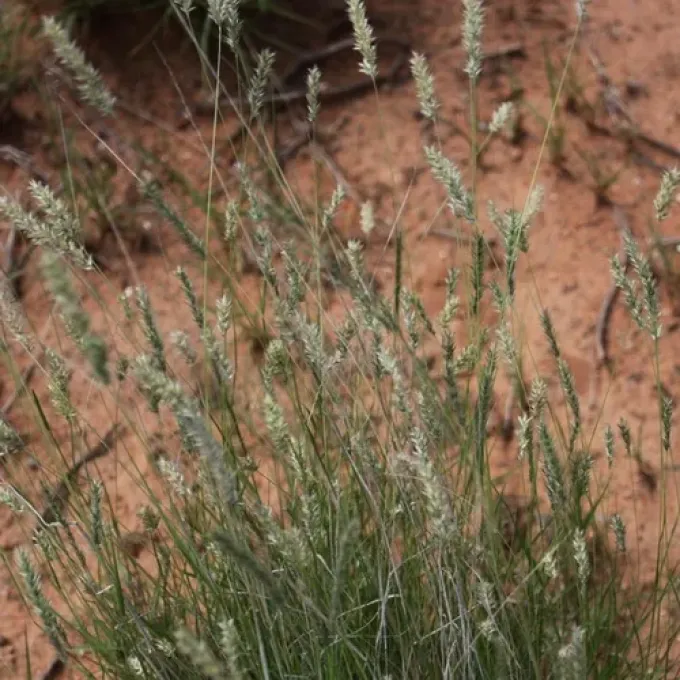
Description
Growing requirements
Enneapogon scoparius, commonly known as plume pappus grass, belongs to the Poaceae family. This perennial bunchgrass is native to dry habitats, particularly in the southwestern United States and Mexico.
The species is highly adapted to arid environments, thriving in sandy, rocky, and low-nutrient soils. Its ability to colonize marginal lands makes it a valuable asset for land restoration projects.
The plant requires full sun exposure for optimal growth and biomass production. It is highly intolerant of shade and waterlogged conditions, necessitating well-drained soil profiles.
Climatically, it is suited to regions with erratic rainfall patterns. The grass has evolved a robust root system capable of accessing deep moisture reserves during prolonged droughts.
Understanding its biological cycle is essential for success: the plant goes dormant during extreme heat or drought, resuming active growth whenever moisture becomes available.
Yield
The primary agricultural use of Enneapogon scoparius is as a forage source for livestock on rangelands. It provides a reliable source of green matter when more palatable grasses are unavailable.
Nutritionally, the grass provides essential fiber and moderate protein levels, helping maintain livestock condition during the critical dry season months.
Yield management requires careful monitoring. Overgrazing is a significant risk, as it reduces the plant's capacity to regenerate and persist in the grassland ecosystem.
- Suitable for rotational grazing systems.
- Can be integrated into seed mixes for erosion control.
- Useful for rehabilitating overgrazed range areas.
By implementing conservative grazing strategies, farmers can maximize the long-term utility of Enneapogon scoparius stands, ensuring sustainable forage availability.
Main diseases and pests
Enneapogon scoparius generally exhibits strong natural resistance to common pathogens. However, specific environmental stressors can lead to localized problems.
Fungal infections, such as rusts or leaf spots, may appear if humidity levels rise significantly or if there is excessive surface moisture during the growing season.
Insect pests, including grasshoppers and certain root-feeding larvae, pose a threat to plant vigor, especially if the population density reaches outbreak levels.
Management-induced threats are primarily related to mismanagement of the stand, specifically failure to allow sufficient rest periods for the plants after grazing.
Field monitoring should focus on identifying signs of yellowing or stunted growth, which may indicate nutrient deficiencies or the onset of pest activity before damage becomes irreversible.