
Nine-awn grass
Enneapogon cenchroides
Description
Growing requirements
Nine-awn grass (Enneapogon cenchroides) is a perennial grass species belonging to the Poaceae family. It is widely recognized for its exceptional adaptation to arid and semi-arid environments, making it a crucial plant for biodiversity in dryland regions.
Originating primarily from the African savanna, this grass thrives in sandy and gravelly soils. It plays a significant role in soil stabilization, as its deep root system helps prevent erosion in fragile, arid ecosystems where vegetation cover is typically sparse.
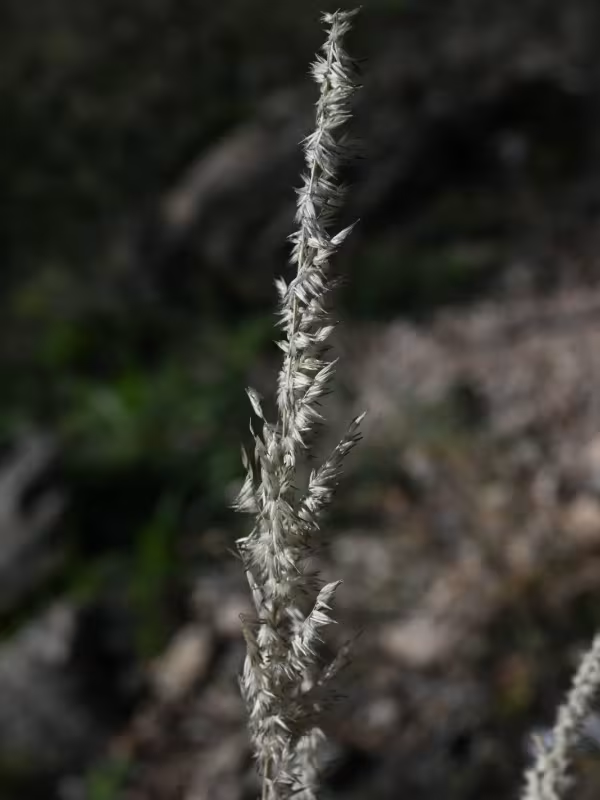
Botanically, the plant is identified by its distinctive dense, spike-like panicles that resemble those of the Cenchrus genus. The leaves are typically slender, covered with fine hairs, which serves as a protective mechanism to minimize water loss through transpiration in harsh sunlight.
The climate requirements for Enneapogon cenchroides are strict; it requires high heat and long periods of intense sunlight to reach maturity. It performs poorly in waterlogged environments, preferring well-drained slopes or flatlands where moisture does not linger at the roots.
From an agricultural standpoint, this species is highly valued as forage. It provides essential nutrition for livestock during the early stages of growth. Farmers in arid regions often rely on this grass to maintain grazing land productivity during seasonal droughts, provided the grazing intensity is carefully managed.