
Palmer's saltgrass
Distichlis palmeri (Vasey) Fassett ex I. M. Johnst.
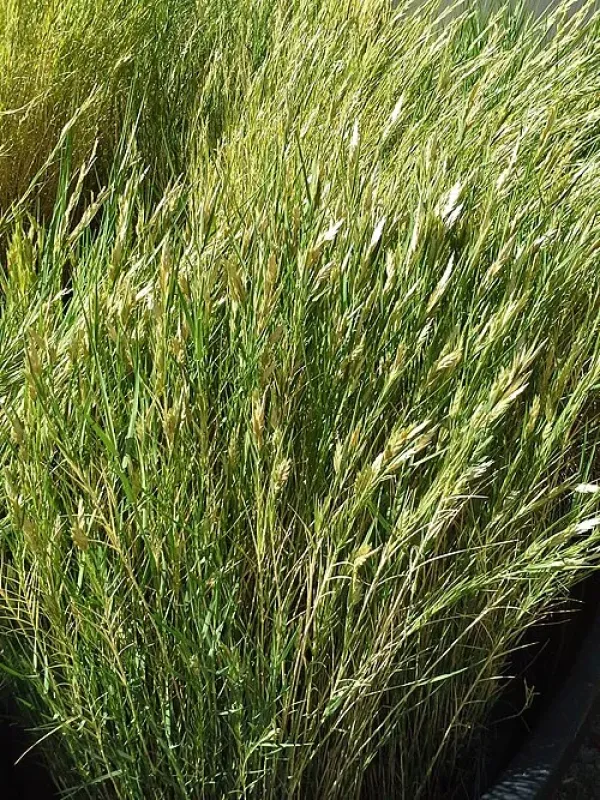
Description
Sowing dates
Sowing of Palmer's saltgrass (Distichlis palmeri) is best conducted during periods when soil temperatures are conducive to germination. In its native habitat, it relies on seasonal flooding, but controlled agricultural sowing requires specific timing.
Seeds are sown in prepared beds with careful attention to depth. Because the seeds are small, excessive burial can lead to poor emergence rates, requiring precise equipment for even distribution.
Optimal soil moisture must be maintained in the early stages. While the plant eventually becomes highly salt-tolerant, initial establishment is most successful in less saline or fresh-water-irrigated conditions.
Row spacing is typically determined by the goal of the plantation, whether for grain production or soil stabilization. Higher density plantings are often used to ensure full coverage and weed suppression.
Seedbed preparation involves flattening and smoothing the area to ensure that water can reach all parts of the field without creating stagnant, anaerobic pockets that inhibit root development.
Growing requirements
Palmer's saltgrass belongs to the Poaceae family and is a specialized halophyte. Its native range includes the Colorado River Delta, where it survives in highly saline environments by effectively processing salt.
The crop's soil requirements are minimal regarding fertility but specific regarding salt management. It thrives in soils that would be toxic to almost any other agricultural plant, making it a pioneer for degraded land.
Climate needs are strictly limited to subtropical and tropical zones. It requires intense sunlight and cannot tolerate hard frosts, which can damage the vegetative tissue and reduce growth rates.
Irrigation is the most unique aspect of its cultivation. It can be irrigated with seawater, which provides a sustainable solution for food production in arid regions where fresh water is unavailable.
The root system is extensive and rhizomatous, allowing the plant to stabilize loose soils effectively. This biological trait also helps in improving soil structure over several growing seasons.
Yield
Grain yield in Palmer's saltgrass is optimized by managing irrigation frequency and nutrient availability. Despite being a halophyte, the plant benefits from periodic applications of nitrogen-based fertilizers.
The grain itself is nutrient-dense and gluten-free, with a flavor profile often compared to wild rice. It represents a significant potential for food security in coastal regions facing soil salinization.
Yield stability is dependent on the management of salt accumulation in the root zone. Proper flushing of the soil with seawater or irrigation water helps prevent levels from becoming lethally high.
Harvesting for grain involves modern harvesting technology capable of handling the specific height and density of the grass canopy to maximize recovery.
Research indicates that yield increases are linked to the consistency of the irrigation cycles, which mimic the natural tidal cycles of the plant’s native environment.
Main diseases and pests
The primary threats include specialized pests that inhabit coastal ecosystems. These organisms can target both the vegetative parts of the plant and the developing grain heads.
Fungal pathogens often emerge when the humidity remains too high for extended periods, particularly in the lower canopy where air circulation is restricted.
Competition from other invasive halophytes can stifle the growth of the crop. Regular monitoring and manual or mechanical removal of invasive species are essential to maintain field purity.
Environmental factors, such as extreme storm surges or shifts in tidal patterns, can physically devastate a crop. Protective sea walls are often necessary in large-scale commercial farming.
Accumulation of heavy metals in the soil from industrial runoff can be a concern if the crop is intended for human consumption, necessitating careful site selection.
Harvesting
The harvest occurs when the grain heads reach physiological maturity. Careful timing is critical, as the grain can shatter and drop prematurely if left in the field too long.
After mechanical cutting, the grain must be immediately cleaned to remove salt residues adhering to the outer hulls. This is a complex technical process that requires specialized washing facilities.
Drying is a mandatory post-harvest step. The grain must be dried to a low moisture content to prevent spoilage and ensure it can be safely stored for extended periods.
The remaining biomass is often salvaged for livestock feed or biomass energy, provided that the salt content is managed through drying or desalination treatments.
Storage requires well-ventilated, pest-proof facilities. Given the unique properties of the plant, proper aeration of the grain is necessary to maintain quality and shelf life.