
Drummond bluegrass
Poa drummondiana
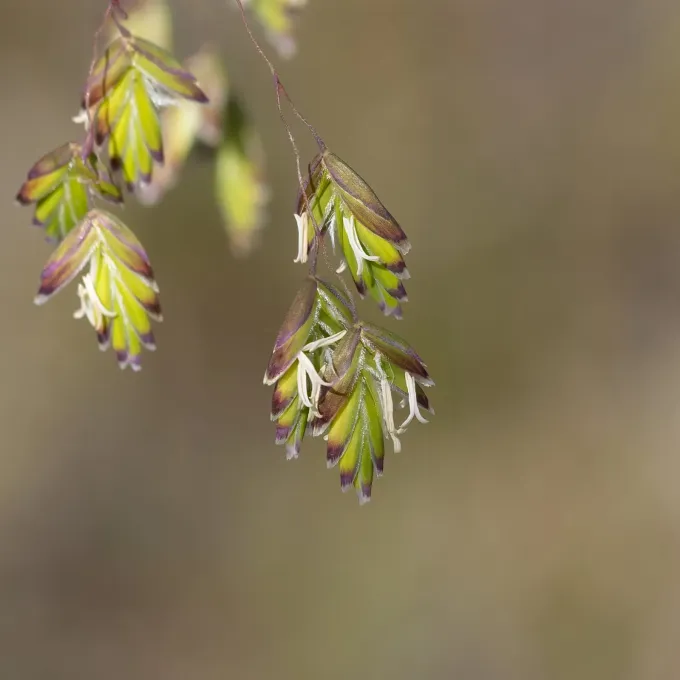
Description
Growing requirements
Drummond bluegrass (Poa drummondiana) is a perennial grass species within the Poaceae family, native to the arid regions of Australia. This plant has evolved to thrive in harsh environments, making it a subject of interest for sustainable agriculture in dry climates.
Botanically, it forms dense tufts, which is a characteristic adaptation for conserving moisture and protecting the soil surface from erosion. Its narrow, hardy leaves are designed to withstand high levels of solar radiation while maintaining metabolic activity under heat stress.
The crop requires well-drained soil profiles to prevent root rot during occasional wet spells. It shows significant resilience to poor soil quality and is capable of colonizing depleted landscapes, contributing to the stabilization of fragile ecosystems.
Environmental preferences for Poa drummondiana include high light intensity and moderate temperature fluctuations. While it is highly drought-tolerant, it requires a short period of favorable moisture to initiate vigorous seasonal growth and seed production.
Agrotechnical management should focus on weed control during the seedling stage, as growth is relatively slow initially. Once established, the stand becomes very competitive, requiring minimal intervention to maintain its health and density over many years.
Yield
The primary agricultural use of Drummond bluegrass is as a permanent forage source for grazing livestock. It provides a reliable supply of biomass in areas where more sensitive crops would typically fail, thus stabilizing food production for livestock farmers.
Yield metrics in terms of dry matter production are highly dependent on the grazing intensity. Rotational grazing schemes have proven to be the most effective method for maximizing the utility and longevity of the bluegrass pastures.
The nutritional profile of this grass is considered satisfactory for cattle and sheep, particularly when supplemented with minerals. Its longevity in the pasture ensures that the initial costs of sowing are amortized over several productive seasons.
Seed harvesting presents a logistical challenge due to the uneven maturation of the seed heads. Successful harvesting operations often utilize specialized machinery set for specific moisture thresholds to prevent significant shattering and field loss.
As climate patterns continue to fluctuate, the role of Poa drummondiana as a resilient forage base becomes increasingly important. Its inclusion in agricultural programs helps to mitigate the risks associated with recurring drought periods.