
Dimeria hohenackeri
Dimeria hohenackeri
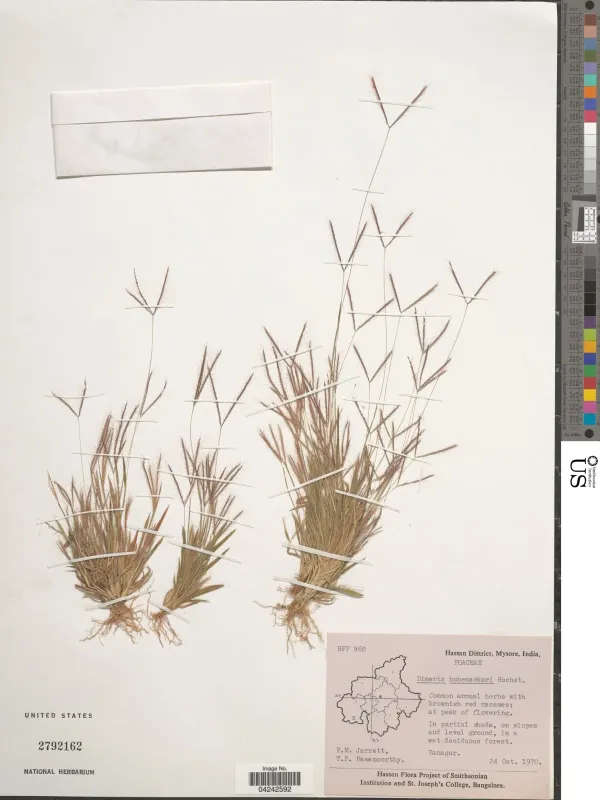
Description
Growing requirements
Dimeria hohenackeri is a member of the Poaceae family, known for its adaptability to tropical environments. As a forage-type grass, it maintains a vegetative structure that is resilient to the environmental pressures of its native Asian range.
The plant exhibits a typical tufted growth habit, with slender culms and fine foliage. Its root system is designed for nutrient uptake in diverse soil types, primarily preferring well-drained loams that prevent root asphyxiation during heavy monsoon rainfall.
Climate requirements for this species are centered around warm temperatures and consistent moisture during the growing phase. It performs best in regions where the annual temperature regime supports year-round or extended vegetative growth cycles.
Agronomic management of Dimeria hohenackeri involves ensuring sufficient light penetration to the base of the plant. Unlike crops that require intensive tillage, this grass thrives in perennial stand conditions where soil structure is preserved.
In terms of economic utility, it is primarily used in grazing systems. It provides biomass that supports local livestock, fitting well into traditional pastoral management where hardy grass species are preferred for long-term sustainability.
Main diseases and pests
The primary health concerns for Dimeria hohenackeri involve fungal pathogens such as rust and leaf spot diseases, which can proliferate during periods of high humidity and poor air circulation within the stand.
Pest pressure often stems from grass-specific insects, including aphids and leafhoppers. These pests can weaken the plant by feeding on sap and potentially facilitating the transmission of viral or phytoplasmal agents.
To mitigate these threats, it is essential to maintain proper stand density. Excessive nitrogen application should be avoided, as it can lead to lush, susceptible growth that attracts higher populations of sap-sucking insects.
Cultural control methods remain the most effective strategy. These include rotational grazing, which helps in breaking the life cycle of pests and prevents the buildup of soil-borne pathogens near the root zone.
Lastly, monitoring the timing of harvest or grazing is crucial. Removing the biomass before the peak of the rainy season can significantly reduce the risk of mold growth and structural decay of the forage material.