
Dichanthium foveolatum
Dichanthium foveolatum
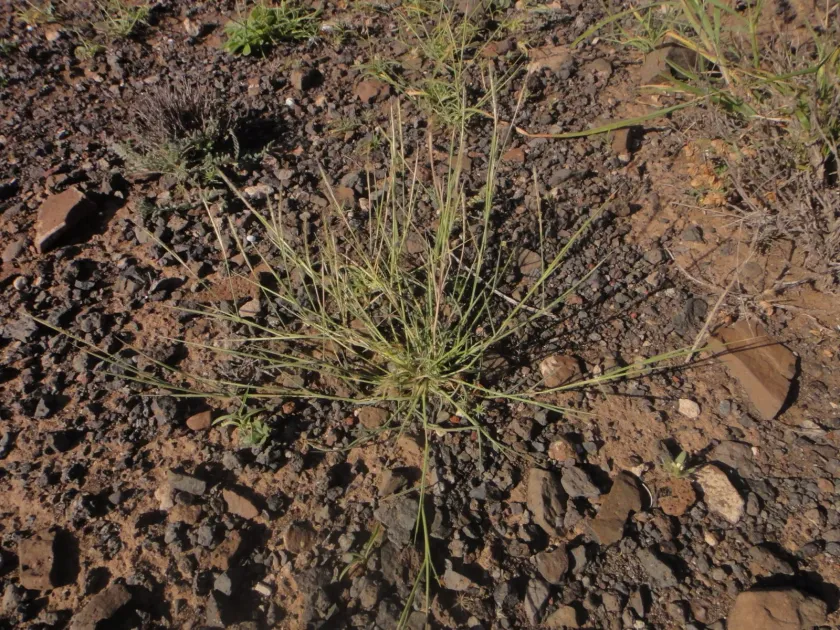
Description
Sowing dates
The sowing of Dichanthium foveolatum should occur during periods of rising temperatures to ensure rapid germination and seedling establishment.
In arid environments, timing the seeding with the onset of the rainy season is critical for achieving high establishment rates and deep rooting.
Seeds should be shallowly planted, typically no deeper than 1–2 centimeters, to allow the tiny seeds to access sufficient moisture without becoming buried.
High-density planting is recommended when establishing new pastures to suppress weed competition and allow the crop to dominate the site.
The species possesses strong self-seeding capabilities, allowing well-managed pastures to persist for many years without the need for frequent reseeding.
Growing requirements
Dichanthium foveolatum is a perennial grass belonging to the Poaceae family, specifically evolved for dry, hot, and challenging environmental conditions.
This grass is highly drought-resistant, featuring a robust root system that helps it survive extended dry spells during the peak of the growing season.
It adapts well to a variety of soil types, including sandy, stony, or nutrient-poor soils, making it an excellent candidate for marginal land reclamation.
Full sun exposure is a requirement for this species, as it is a light-demanding plant that does not perform well under dense shade or competition.
It maintains growth across a wide range of soil pH levels, demonstrating a high degree of ecological plasticity in various climatic zones.
Yield
The primary agricultural use for this species is as a grazing forage, providing a reliable food source for livestock in dryland pastoral systems.
The forage is palatable to grazing animals, particularly in its vegetative stage, contributing to steady weight gains and maintenance of health.
Yield production is highly dependent on precipitation, yet the grass maintains green biomass even when more sensitive species have succumbed to drought.
While primarily a grazing grass, it can be harvested for hay if managed correctly and mowed before the plant reaches a highly fibrous reproductive stage.
It also serves a vital role in soil conservation, where its fibrous root network acts to stabilize soil particles on vulnerable, sloping landscapes.
Main diseases and pests
Fungal diseases, particularly rusts, can impact the foliage and overall quality of the forage if humidity remains high for extended periods.
Insect pests, such as aphids and various grass-feeding beetles, may cause damage during the active growth phases, requiring monitoring.
Overgrazing is a significant risk, as it depletes root reserves and can lead to the invasion of woody shrubs or aggressive, less desirable weeds.
Waterlogging and poor soil drainage significantly increase the risk of root rot, which can thin the population and decrease overall pasture longevity.
Adopting rotational grazing strategies is the most effective management tool to minimize these threats and ensure the continued productivity of the grass stand.