
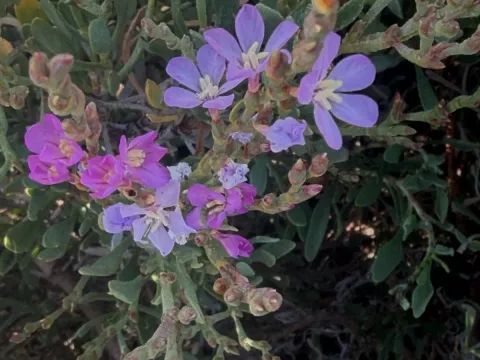
Limoniastrum
Limoniastrum
Limoniastrum is a genus of perennial shrubs and subshrubs belonging to the Plumbaginaceae family. These plants are primarily native to arid and semi-arid regions, particularly across the Mediterranean basin and North Africa.
What the section contains
Limoniastrum
As true halophytes, these plants possess specialized physiological adaptations to thrive in high-salinity environments. Their leaves are often succulent or leathery, designed to manage salt accumulation and minimize water loss through transpiration.
Agronomic requirements center on well-draining, alkaline soil. They are exceptionally tolerant of poor, rocky, and saline substrates that would be unsuitable for most traditional agricultural crops. Full sun exposure is essential for maintaining a compact growth habit.
The climate requirement involves warm temperatures with distinct dry periods. Limoniastrum is not suited for high-humidity or cold, damp climates, as excessive soil moisture consistently leads to root degradation.
Maintenance is minimal once the plant is established. Supplemental irrigation should only be provided during extreme, prolonged droughts, and even then, in moderate amounts to prevent root rot in the heavy soil structures they often inhabit.
Root rot, primarily caused by Phytophthora or Pythium species, remains the most significant threat to Limoniastrum. This condition is almost always associated with poor soil drainage or excessive irrigation practices.
Spider mites are common pests in hot and arid conditions. These microscopic arachnids thrive when plant stress is high, causing stippling on the leaves and eventually leading to premature senescence of the foliage.
Scale insects can attach to the woody stems of mature shrubs, feeding on sap and excreting honeydew. This substance often attracts sooty mold, which can inhibit photosynthesis by covering the surface of the leaves.
Mealybugs represent another pest concern, particularly in nursery settings or areas with low airflow. These pests hide in the crevices of stems and leaf axils, making them difficult to detect until an infestation is well-established.
Preventative measures involve maintaining clean growing areas and ensuring adequate spacing between plants to maximize airflow. In severe cases, targeted insecticide applications or horticultural oils are recommended to manage pest populations effectively.