
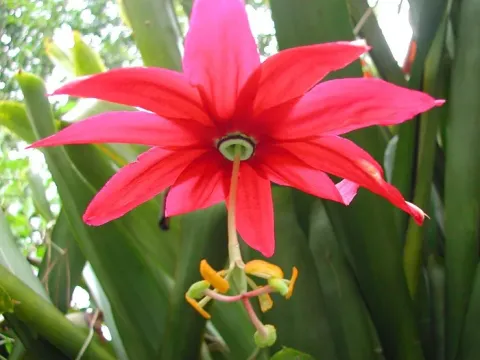
Banana passionfruit
Passiflora antioquiensis
Passiflora antioquiensis, commonly known as banana passionfruit, is a vigorous climber belonging to the Passifloraceae family. It is characterized by its long, flexible stems that readily climb on available supports.
What the section contains
Banana passionfruit
The plant originates from the high-altitude Andean regions of Colombia. It thrives in cool, mild tropical highland climates and is highly sensitive to excessive heat, which can inhibit its development.
Cultivation requires filtered sunlight and high humidity levels. The soil must be fertile, well-draining, and slightly acidic to neutral in pH to ensure optimal growth and prevent root issues.
Agrotechnical management involves providing sturdy vertical support systems. Regular pruning is essential to manage the vine's rapid growth, promote air circulation, and stimulate the development of flower-bearing wood.
Watering needs to be consistent and moderate, ensuring the soil remains moist but not waterlogged. Nutrient requirements are met through regular applications of balanced fertilizers, particularly those rich in micronutrients.
The primary agricultural objective of this species is its fruit, which is highly prized for its sweet, tropical flavor. The pulp has a pleasant acidity and is commonly described as having hints of banana and pineapple.
Yield productivity is heavily dependent on maintaining optimal environmental conditions and precise canopy management. Commercial plantations focus on balancing vegetative growth with reproductive fruit development.
The fruits are elongated with a bright yellow or orange skin when ripe. The internal pulp is aromatic and widely used in the food industry for juices, jams, desserts, and various culinary preparations.
Beyond its culinary utility, the plant is valued for its striking, large pink flowers. This makes it an excellent choice for ornamental greenhouse or conservatory production in temperate climates.
Consistent harvests are achievable under controlled conditions where nocturnal temperatures remain stable, facilitating proper flowering and fruit set throughout the growing season.
Spider mites are a common threat in indoor or greenhouse environments where the air is dry. Maintaining high humidity and monitoring foliage regularly are key strategies for effective pest management.
Root rot is the most significant disease risk, usually resulting from over-irrigation or inadequate drainage. Preventing water stagnation is critical for maintaining long-term plant health.
Aphids can infest young shoots and flower buds, potentially damaging the aesthetic quality of the plant. Integrated pest management, including the use of biological agents, is recommended.
Whiteflies can become problematic in poorly ventilated areas. Ensuring good airflow and cleanliness within the growing area is essential for preventing outbreaks of these common greenhouse pests.
Sanitation practices, such as the timely removal of dead or diseased plant tissue, are fundamental in preventing the onset and spread of various fungal pathogens in dense vine plantings.
Harvesting is performed manually due to the delicate nature of the fruit skin. Growers should identify the appropriate stage of maturity by the fruit's vibrant color change, which signals peak ripeness.
Avoiding over-ripeness on the vine is crucial to preserve the fruit's texture and shelf life. The harvest should ideally take place during cooler parts of the day to ensure the best product quality.
The harvest season is typically prolonged, requiring frequent inspection of the crop to pick fruit as they reach the desired maturity level. This phased approach maximizes the total yield.
Post-harvest handling requires careful packing to prevent mechanical bruising. Proper cooling immediately after harvest helps stabilize the fruit and slows down the maturation process for storage.
Sorting and grading the harvest by size and ripeness ensures a standardized product for market. This practice enhances the value of the crop for either fresh market distribution or industrial processing.