
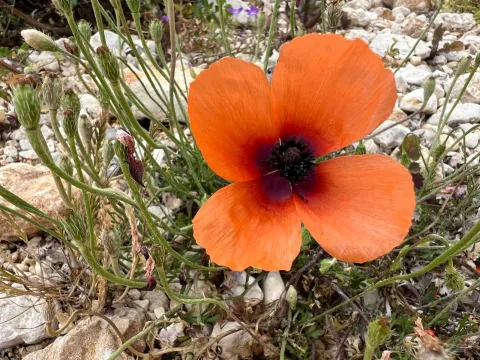
Roemeria apula
Roemeria apula
Roemeria apula is an annual herbaceous plant belonging to the Poppy family (Papaveraceae). Its life cycle is typically synchronized with seasonal moisture patterns, making it a well-adapted species for specific Mediterranean and temperate environments.
What the section contains
Roemeria apula
Sowing should be scheduled for early spring, once the soil has sufficiently warmed to support germination. It is advisable to distribute the seeds evenly on the prepared surface, covering them with a very thin layer of soil to ensure optimal light exposure.
The seedling phase is critical for the establishment of the taproot. Providing adequate moisture immediately after sowing is essential to break dormancy and ensure high field emergence rates across the cultivated area.
Spacing between plants should be carefully managed to prevent excessive competition. Proper plant density facilitates air circulation within the canopy, which is vital for preventing humidity-related issues as the plants approach their flowering stage.
Consistent growth is achieved when the soil temperature remains stable. Under favorable conditions, the transition from vegetative growth to reproductive development occurs rapidly, characteristic of many annuals in this family.
This species thrives in full sun, requiring exposure to direct solar radiation for the majority of the day. Inadequate lighting conditions will inevitably result in spindly growth and a significant reduction in reproductive success.
Soil requirements focus primarily on drainage. The species is highly susceptible to root damage caused by waterlogged conditions, making well-drained, porous soils such as sandy loams or calciferous substrates the most suitable choices.
The plant demonstrates remarkable tolerance to dry conditions, utilizing its deep root system to access water from lower soil horizons. Despite this, moderate fertilization during the early vegetative stage can significantly enhance overall biomass production.
The ideal temperature range for Roemeria apula is between 15°C and 25°C. Excessive heat during the seed-filling phase may accelerate senescence and reduce the quality of the harvestable material.
Weed control is the most important agronomic practice during the first few weeks after emergence. Since the plant starts with a relatively slow growth rate, manual or mechanical removal of invasive species is necessary to avoid nutrient deficiency.
Pathogen pressure is mainly driven by environmental factors, particularly high humidity. Powdery mildew is a common threat that can rapidly colonize leaf surfaces, causing chlorosis and impairing the photosynthetic efficiency of the plant.
Insects such as aphids are frequent pests that congregate on young flower buds and shoots. Their feeding activity causes significant physical damage and can act as vectors for various plant viruses, necessitating diligent scouting.
Root diseases, often caused by soil-borne pathogens like Pythium species, represent a major risk when drainage is poor. Ensuring that the soil does not remain saturated is the most effective preventative measure against these systemic threats.
Additionally, certain coleopteran species can attack the foliage and reproductive parts. Integrated pest management strategies, including the use of trap crops or beneficial insect habitats, are recommended to minimize chemical input.
- Powdery mildew (Erysiphaceae)
- Aphids (Aphidoidea)
- Root rot (Pythium/Rhizoctonia)
- Weevils (Curculionidae)
- Fungal wilt (Fusarium)