
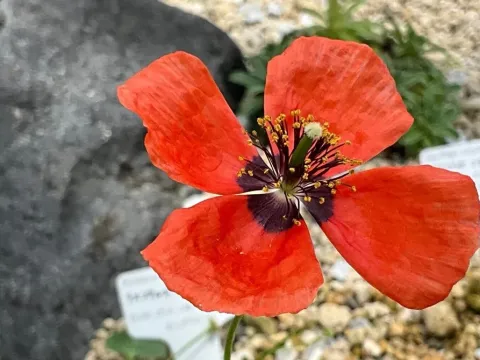
Roemeria
Roemeria
Roemeria is a genus of annual herbaceous plants classified within the poppy family, Papaveraceae. These plants are closely related to poppies but are botanically distinguished by their elongated, multi-seeded capsule fruits that release seeds upon maturation.
What the section contains

Roemeria
The native range of this genus includes regions across the Mediterranean, the Caucasus, and parts of Central Asia. Roemeria species typically thrive in arid or semi-arid environments, such as open steppes and rocky slopes, where they act as ephemerals.
These plants have strict light requirements, demanding full sun exposure for optimal physiological performance. Any shade will significantly hinder the development of the stem and reduce the plant's ability to produce viable seeds.
The ideal soil conditions involve well-draining, light-textured substrates, such as sandy loams. They are generally tolerant of alkaline soils and benefit from a climate that offers high thermal accumulation during the spring season.
Cultivation requires careful water management, as Roemeria is highly sensitive to waterlogged conditions. Excessive soil moisture is the primary cause of plant death, as it induces rot in the taproot system.
The primary agricultural threats to Roemeria are fungal pathogens, specifically those that thrive under high humidity. Powdery mildew is a common concern that manifests as a dusty white layer on the foliage, eventually causing leaf chlorosis.
Root rot, typically associated with Fusarium or Pythium species, poses a severe risk in fields with poor drainage. Implementing a rigorous crop rotation strategy helps mitigate the buildup of soil-borne pathogens over multiple seasons.
Pest pressure is largely driven by sap-sucking insects like aphids. These insects congregate on the soft tissues of the buds, extracting vital nutrients and secreting substances that can lead to soot mold infections.
Integrated Pest Management (IPM) is recommended for Roemeria, focusing on early detection and the use of natural predators or organic insecticides to preserve the plant's delicate health status.
Finally, competition from aggressive weeds is a major factor in crop failure. Given the plant's relatively slow early growth phase, keeping the field free of invasive weeds is essential to ensure consistent yields and plant vigor.