
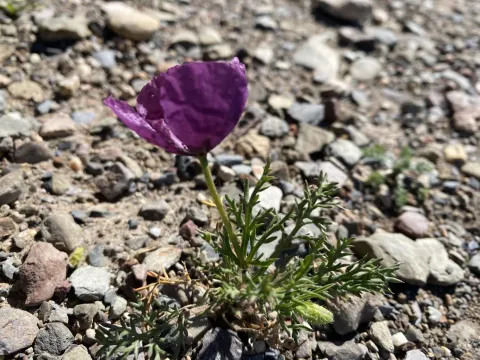
Roemeria hybrida
Roemeria hybrida
Roemeria hybrida is a herbaceous annual plant belonging to the Papaveraceae family. Naturally occurring in Mediterranean and Western Asian regions, it is often found in arid and semi-arid landscapes where it thrives on exposed, sun-drenched sites.
What the section contains
Roemeria hybrida
The plant requires well-drained, sandy or loamy soils with a neutral to alkaline reaction. It is highly intolerant of waterlogging, which often leads to root collar decay, making site selection based on soil porosity a priority for any cultivation effort.
Botanically, it features dissected, glaucous leaves and showy flowers that share morphological similarities with other poppies. It is well-adapted to high light intensities and requires a full-sun location to ensure robust growth and flower development throughout the season.
Climate-wise, Roemeria hybrida prefers temperate conditions with dry, warm summers. While it is hardy in its native range, it can be sensitive to prolonged frosts, especially when young, which necessitates late spring planting in regions with cooler climates.
When cultivating, spacing is crucial to prevent competition for light and water. The crop does not require heavy fertilization; in fact, excessive nitrogen often leads to weak stems, making the plants prone to lodging in windy weather conditions.
The primary threats to Roemeria hybrida in a cultivation setting are fungal pathogens, specifically those causing root and crown rot. These pathogens proliferate in environments with poor drainage or excessive humidity, making soil moisture control the most important preventive measure.
Aphids and certain coleopteran pests pose a risk to the plant during its vegetative stage. Infestations can result in stunted growth and the spread of viral diseases, so early detection through routine field scouting is essential for managing the health of the crop.
Weed management is a significant challenge for this species, as it lacks aggressive growth patterns during the seedling stage. Implementing mechanical weeding or mulching can help control weeds and prevent them from overtaking the crop's space and resources.
In cases of severe outbreaks, targeted applications of bio-pesticides are recommended over heavy chemical treatments to preserve the ecological balance. This is particularly relevant if the plant is being grown for potential medicinal or decorative uses.
Crop rotation is strongly advised for Roemeria hybrida fields to break the life cycle of host-specific pests. Rotating with non-related species helps maintain soil health and reduces the need for external chemical inputs to control diseases.