
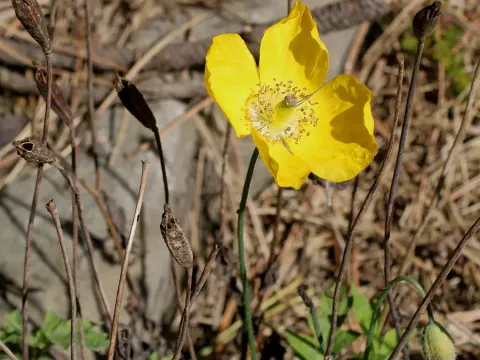
Rhaetian poppy
Papaver rhaeticum
The Rhaetian poppy (Papaver rhaeticum) is a member of the Papaveraceae family. This perennial herb is native to the high-altitude regions of the Alps, where it typically colonizes rocky slopes and alpine scree fields.
What the section contains
Rhaetian poppy
The species requires extremely well-drained, gritty, or stony soil conditions to thrive. In cultivation, it performs poorly in heavy, clay-based soils that retain moisture, as these conditions inevitably lead to root rot and failure.
Climatically, the Rhaetian poppy prefers cool to moderate temperatures with high levels of ultraviolet light, reflecting its alpine origin. It is poorly adapted to hot, humid summers, which can induce rapid senescence of the foliage.
Agricultural management should focus on mimicking natural high-altitude environments. This involves providing sufficient aeration and avoiding excessive fertilization, as high nutrient levels tend to result in leggy, weak plants prone to collapse.
Its primary economic use is in the niche market of alpine gardens and specialist botanical collections. It serves as an important genetic resource for breeding programs aiming to develop poppies with extreme frost tolerance and specialized environmental adaptation.
The most significant threat to the cultivation of Papaver rhaeticum is fungal infection, particularly root and crown rots caused by various Phytophthora and Pythium species. These pathogens thrive in stagnant soil water.
Insect pests such as aphids and leaf-eating beetles can cause considerable damage to the vegetative parts. During dry spells, spider mites may become a localized problem, especially in confined or poorly ventilated growing areas.
Preventative measures must prioritize hydrological control: ensuring rapid soil drainage and maintaining consistent but light moisture levels are the most effective strategies for preventing disease outbreaks.
Integrated pest management protocols should emphasize cultural control methods over chemical ones. Monitoring for early signs of infestations and maintaining optimal airflow will drastically reduce the need for synthetic pesticides.
Good hygiene in the growing site is essential. Removing debris and controlling competing weeds prevents the buildup of pathogen inoculum and minimizes the micro-habitat favorable to common garden pests.