
Purple ramping-fumitory
Fumaria purpurea
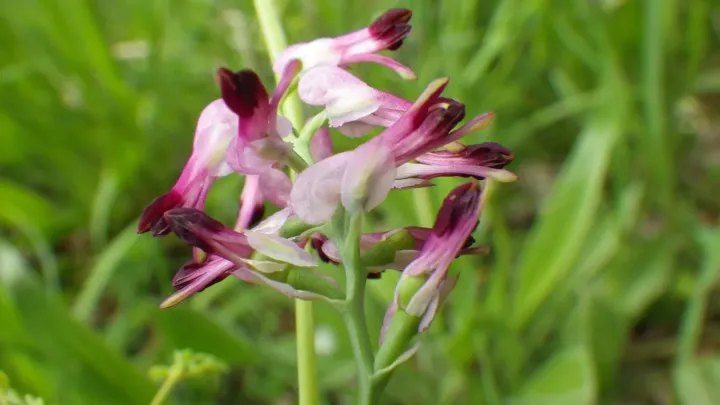
Description
Growing requirements
The purple ramping-fumitory (Fumaria purpurea) is a distinctive annual plant belonging to the Papaveraceae family. It is typically characterized by its climbing or scrambling habit and vibrant purple flowers, which distinguish it from related species in the Fumaria genus.
This species is native to Western Europe, with a focus on specific habitats in the United Kingdom and Ireland. It historically thrives in arable landscapes, often found in cultivated fields, gardens, and along field margins where the ground has been disturbed.
The climate requirements include moderate temperatures and oceanic influence. The plant performs best in mild, moist conditions where winter frosts are not severe and the growing season allows for rapid development from seed to maturity.
Regarding soil preferences, it favors well-drained, fertile soils that are often calcareous or neutral in nature. It does not tolerate waterlogged conditions or extreme acidity, as these factors hinder its root respiration and nutrient uptake.
Cultivation practices for this species as an agricultural crop do not exist, as it is primarily regarded as a rare wild plant. Its life cycle is synchronized with traditional farming practices, relying on soil disturbance to trigger seed germination each spring.
Main diseases and pests
The primary threat to the purple ramping-fumitory is the widespread use of intensive agricultural chemicals, particularly herbicides. Because it is highly susceptible to most broad-spectrum weed control agents, it has declined in many historical locations.
Fungal infections, such as powdery mildew, pose a consistent risk during wet and humid seasons. These pathogens can cause significant defoliation, reducing the plant's ability to produce viable seeds for the next generation.
Insect pests including aphids and various seed-boring beetles can severely damage the reproductive organs of the plant. High levels of infestation can lead to a failure in seed set, threatening the local stability of the population.
Agricultural management tools such as deep plowing and mechanical harrowing effectively remove the species from field areas. Consequently, modern agricultural technology tends to limit the presence of this plant on productive farmland.
Conservation of this species requires a balance between agricultural productivity and the maintenance of field margins where the plant can thrive without the direct pressure of intensive chemical management and mechanical disturbance.