
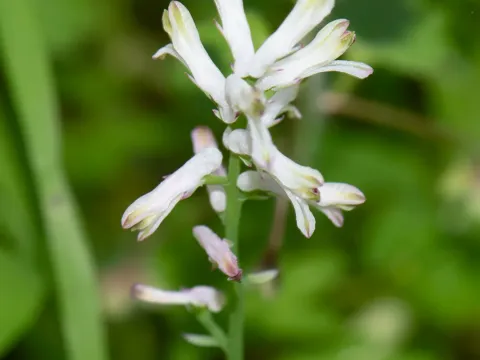
Fumaria macrocarpa
Fumaria macrocarpa
Fumaria macrocarpa is an annual herbaceous plant belonging to the Poppy family (Papaveraceae). In agricultural practice, planting is carried out in early spring as soon as the soil warms up to 5-8 degrees Celsius.
What the section contains
Fumaria macrocarpa
The optimal method for sowing is row planting with inter-row spacing of 15-20 cm. Seeds should be buried at a shallow depth of 1-2 cm to ensure optimal germination and soil contact.
In industrial production, it is vital to maintain uniform plant density to maximize crop yields. The seeding rate is approximately 3-5 kg per hectare to ensure adequate stands.
Seedlings typically emerge within 10-14 days, provided that soil moisture is maintained at an appropriate level. Subsequent mechanical weeding is essential to support early root development.
Late sowing is discouraged because high summer temperatures can trigger early flowering, which significantly limits the accumulation of green biomass required for harvest.
The plant thrives in well-lit areas with fertile, well-drained soils. Loamy or sandy-loam soils with neutral to slightly acidic pH levels are considered ideal for optimal growth.
While moderately drought-tolerant, Fumaria macrocarpa requires consistent soil moisture, ideally around 60-70% of field capacity, to produce high-quality medicinal material.
The optimal temperature range for active growth is between +18 and +22 degrees Celsius. Being sensitive to severe frost, it is cultivated primarily as a spring crop.
Crop rotation is mandatory to prevent the buildup of soil-borne pathogens, specifically avoiding fields previously occupied by other members of the Poppy family.
The crop responds well to mineral fertilization, particularly phosphorus and potassium, which help strengthen stems and enhance the concentration of bioactive compounds.
The yield of green biomass for Fumaria macrocarpa typically ranges from 5 to 8 tonnes per hectare, depending on soil quality and agricultural input.
After processing and drying, the yield of raw medicinal material is approximately 20-25% of the fresh weight, resulting in 1.2–2 tonnes of dried product per hectare.
Maximum productivity is achieved through consistent irrigation and strict weed control, as weeds can outcompete the crop during its slow initial growth phase.
The quality of the final harvest is evaluated based on the content of alkaloids, specifically fumarine, which reaches peak levels during the plant's full blooming phase.
Applying nitrogen fertilizers in fractional doses during the stem elongation stage is recommended to boost total vegetative volume before the flowering cycle begins.
Fumaria macrocarpa is susceptible to various fungal diseases, such as powdery mildew and leaf spot, especially in environments with high humidity and poor aeration.
Common pests include aphids and spider mites, which feed on the sap of young shoots, reducing plant vigor and overall quality for pharmaceutical use.
Integrated pest management, including regular field inspections and the use of biological control agents, is recommended to protect the crop without damaging product quality.
Root rot can occur in poorly drained soils, making adequate site preparation and drainage management crucial for long-term plantation health.
Effective weed management is vital during the early stages of vegetation, as the crop is very sensitive to shading and nutrient competition from more aggressive weeds.
Harvesting is performed during the peak flowering stage to ensure the highest concentration of active pharmaceutical ingredients in the collected biomass.
Mowing is conducted using specialized harvesters set to cut at a height of 5-10 cm from the soil surface to minimize dirt and debris contamination.
The harvested material must be transported to drying facilities immediately to prevent heating and decay, which can rapidly degrade the essential bioactive compounds.
Drying is conducted in well-ventilated rooms or professional dryers at temperatures not exceeding 45 degrees Celsius to preserve the integrity of the alkaloids.
The final dried product is packed into breathable containers and stored in cool, dark, and dry locations to maintain quality over extended shelf-life periods.