
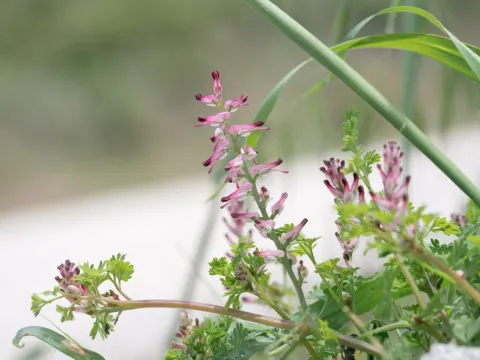
Fumaria petteri
Fumaria petteri
Fumaria petteri is a representative of the Papaveraceae family, characterized by its unique pharmacological profile and slender morphology. As an annual plant, it completes its life cycle within a single season, requiring precise timing for cultivation.
What the section contains
Fumaria petteri
The plant thrives in well-drained, fertile soil compositions. It prefers sunny locations but requires consistent soil moisture to prevent premature senescence during the flowering period, which is essential for biomass accumulation.
Originating from Mediterranean and Central European regions, it is well-adapted to temperate climates. Its distribution is limited to areas where spring temperatures allow for early germination and steady development of the vegetative mass.
Agricultural management requires careful attention to soil preparation. Deep tillage followed by light harrowing is recommended to create a fine seedbed, ensuring good seed-to-soil contact for uniform germination.
The primary economic value of Fumaria petteri lies in its secondary metabolites. Extracting these compounds requires harvesting the aerial parts at the peak of the flowering stage, which ensures the highest concentration of active alkaloids.
Common agricultural pests affecting Fumaria species include aphids, which colonize the growing tips and underside of the leaves, causing leaf curling and reducing the overall quality of the raw material.
Fungal pathogens such as powdery mildew can be a significant threat, especially during periods of high humidity and poor ventilation within the crop canopy, leading to reduced yield.
Soil-borne diseases like root rot often occur if the crop is grown on poorly drained land, resulting in wilting and plant death, which can cause significant financial losses for the grower.
Integrated pest management (IPM) is essential for maintaining a high-quality crop. This includes regular field scouting to identify pest pressure early and utilizing organic-approved treatments when necessary.
Weed control is perhaps the most challenging aspect of its cultivation. Since the crop is delicate, early mechanical weeding must be done with extreme caution to avoid damaging the shallow root systems.