
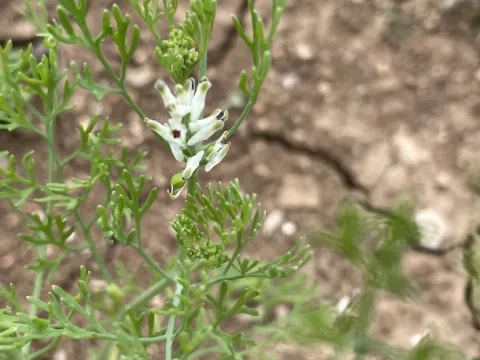
Fumaria parviflora
Fumaria parviflora
Fumaria parviflora is an annual herbaceous plant belonging to the Papaveraceae family. It typically germinates in early spring when soil temperatures reach 5–8 degrees Celsius, making it an early-season grower.
What the section contains
Fumaria parviflora
For cultivation purposes, autumn sowing is recommended. This allows the seeds to undergo natural stratification during winter, resulting in more uniform and vigorous seedling emergence in early spring.
Seeds should be sown at a shallow depth of 1–2 centimeters. Proper seed-to-soil contact is essential for successful germination, so light rolling after seeding is a common practice in field operations.
The plant has a high seed production capacity, which allows for rapid colonization of available space. Agronomists must manage this characteristic to prevent unwanted spread into neighboring crop fields.
Seedlings are relatively delicate in the early stages and require consistent moisture to establish their root systems before the onset of more challenging climatic conditions.
The plant thrives in well-drained, fertile soils with high humus content. It performs best on loam and sandy-loam soils, preferring a neutral to slightly alkaline pH range for optimal nutrient uptake.
Fumaria parviflora is light-demanding. While it can tolerate minor shading, full sun exposure is preferred for the best development of vegetative biomass and high concentration of secondary metabolites.
Moderate moisture is crucial for healthy development. While the plant can withstand temporary dryness, severe drought during the peak growth phase will trigger early flowering and reduce total yield.
The plant is sensitive to excessive mineral fertilization, which can lead to rapid but structurally weak growth. A balanced approach to soil fertility management is recommended for high-quality production.
Good air circulation is vital to prevent moisture accumulation around the lower leaves, which is often a precursor to fungal infections in dense stands of the plant.
Root rot is the most significant threat, especially in poorly drained soils. The development of these pathogens is often favored by waterlogged conditions and lack of proper soil aeration.
Aphids are the primary insect pests affecting the plant. These pests feed on the sap, causing leaf curling and potential stunted growth, which necessitates regular monitoring of the crop canopy.
Powdery mildew represents a major concern during periods of high humidity and poor ventilation. Preventive measures include maintaining appropriate plant density to ensure adequate airflow.
Weed competition during the early growth stages can significantly hamper development. Mechanical weeding or inter-row cultivation is usually necessary to maintain the health and vigor of the crop.
Crop rotation with non-host species is an effective agronomic strategy to disrupt the life cycles of soil-borne pathogens and pests associated with the Papaveraceae family.
The harvest should occur during the full flowering phase when the concentration of alkaloids and bioactive compounds is at its maximum. This is the critical window for obtaining high-quality material.
The plant is typically cut 5–10 centimeters above ground level. Avoiding the base of the stem and roots ensures that the harvested material is clean and free from soil contamination.
Drying must be performed in well-ventilated, shaded environments at temperatures not exceeding 40 degrees Celsius. Excessive heat or direct sunlight will degrade the plant's delicate active components.
Once dried, the plant material should be carefully inspected and cleaned of any organic impurities. Proper packaging in breathable materials is necessary to maintain quality during storage.
Storing the final product in a cool, dark, and dry place is essential for maintaining its medicinal efficacy and preventing the loss of volatile compounds over time.